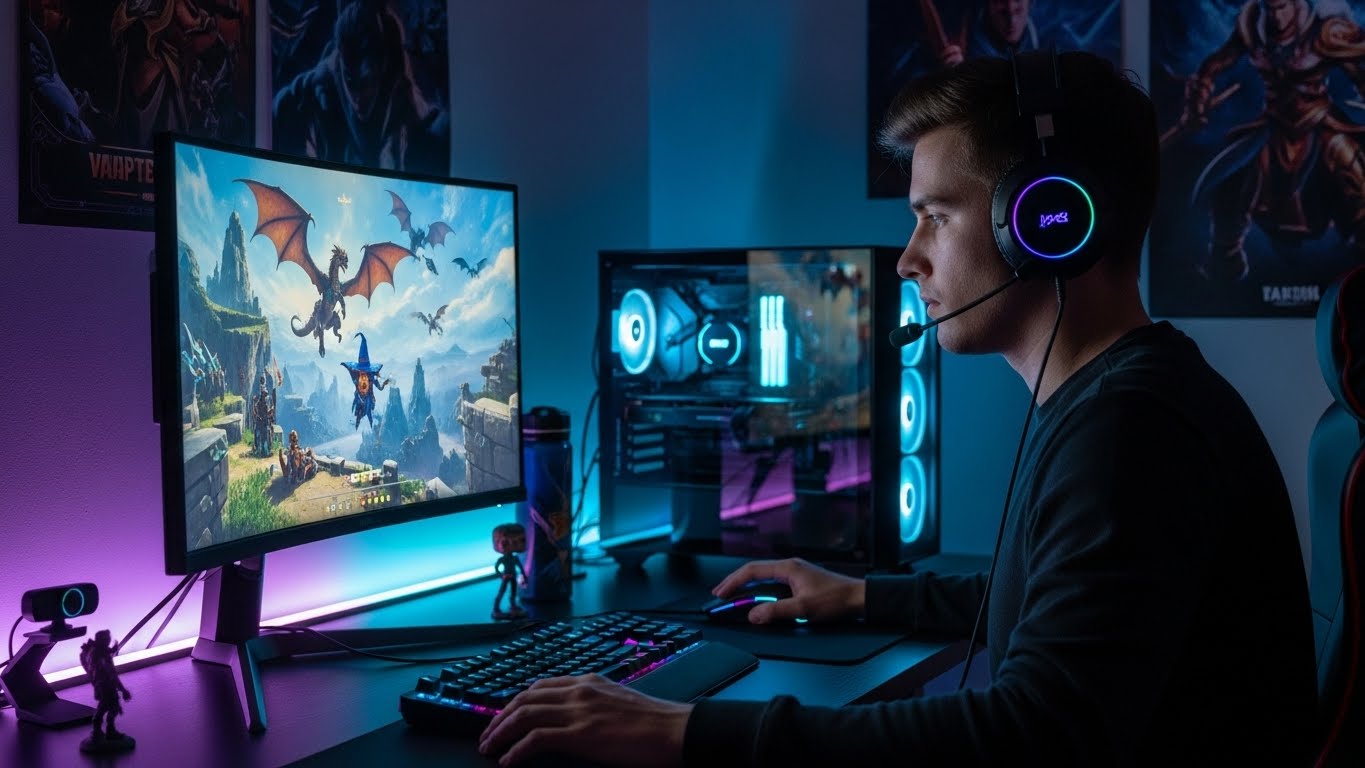

Gaming has always been a captivating medium of entertainment, but its transformation over the years is nothing short of extraordinary. What began as simple pixelated visuals and rudimentary mechanics has evolved into highly immersive, visually stunning experiences that push the boundaries of technology. In this blog, we’ll explore the incredible journey of gaming, its impact on culture, and the future that awaits players.
The Humble Beginnings: Arcade Games and Consoles
In the early days of gaming, the arcade was king. With games like Pong and Space Invaders, players were introduced to the concept of interactive entertainment. The graphics were basic, and the gameplay was often simple, but the core appeal was undeniable: fun. At the same time, home consoles began to take shape. The Atari 2600 and the Nintendo Entertainment System (NES) brought gaming to living rooms, forever changing how people interacted with games. These early consoles set the foundation for the digital landscapes we now navigate daily.
Despite the limited hardware, creativity flourished. Games were designed with straightforward objectives but required skill and strategy to master. For many, these early games are remembered fondly as the first step toward the gaming revolution.
The Rise of 3D and Open Worlds
As technology advanced, so did the complexity and depth of gaming. The 1990s marked the beginning of 3D graphics in video games, with titles like Super Mario 64 and The Legend of Zelda: Ocarina of Time setting new standards. The introduction of full 3D environments allowed developers to build expansive, interactive worlds, a concept that continues to dominate today’s gaming landscape.
With the rise of open-world games like Grand Theft Auto III and The Elder Scrolls V: Skyrim, players could now roam freely, completing missions and exploring vast, detailed universes. This new level of immersion invited players to lose themselves in intricate stories and expansive worlds that felt alive and responsive. These games didn’t just entertain; they created a sense of belonging in a world of infinite possibility.
The Multiplayer Revolution: Online and Co-op Play
Gaming has always been a social activity, but it wasn’t until the 2000s that online multiplayer gaming truly took off. With the advent of broadband internet and platforms like Xbox Live and PlayStation Network, gamers were no longer limited to playing with friends in the same room. The explosion of online gaming brought people together from all corners of the globe.
Games like Halo 2, World of Warcraft, and Fortnite created communities where players could team up, compete, or just hang out virtually. The rise of multiplayer gaming created new opportunities for collaboration, competition, and socialization, making gaming a central hub for global connection. No longer just a solitary hobby, gaming became a platform for worldwide interaction.
The Graphics Revolution: Realism Meets Artistry
One of the most noticeable advancements in the gaming industry has been the leap in graphical fidelity. Early games were blocky and pixelated, but modern titles strive for photorealism, with lifelike environments and intricate character models. Games like The Last of Us Part II and Red Dead Redemption 2 showcase the impressive capabilities of current-gen hardware, blending realism with artistry to create breathtaking visual experiences.
Yet, despite the push for realism, many developers continue to embrace unique art styles. Games like Celeste and Hollow Knight have shown that graphics don’t always need to mimic real life to be beautiful. Instead, they create worlds that are distinct, imaginative, and filled with character.
VR and AR: The Next Frontier of Gaming
As gaming technology continues to evolve, virtual reality (VR) and augmented reality (AR) are poised to take the gaming experience to new heights. VR has already made waves with games like Beat Saber and Half-Life: Alyx, offering players an immersive, first-person perspective that makes them feel as though they’ve stepped inside their favorite virtual worlds.
AR, on the other hand, brings elements of gaming into the real world. Pokémon Go revolutionized the way players interacted with their environment, blending the digital and physical worlds in ways never seen before. Both VR and AR are still in their infancy, but they promise to change the way we experience games forever.
Gaming’s Cultural Impact: A Global Phenomenon
Gaming is no longer just a hobby; it has become a global cultural phenomenon. From esports tournaments with million-dollar prizes to gaming influencers on platforms like Twitch and YouTube, the industry has given rise to an entirely new culture. The social aspect of gaming has flourished, with fans gathering to watch live streams, attend conventions, and share content online.
The gaming community has also become an avenue for self-expression and advocacy. Games have tackled complex themes, from mental health (Celeste, Hellblade: Senua’s Sacrifice) to environmentalism (The Legend of Zelda: Breath of the Wild). With storytelling and interactive experiences more sophisticated than ever, gaming is proving to be a powerful medium for conveying important messages and inspiring change.
Looking Forward: The Future of Gaming
As we look to the future, the gaming industry continues to push boundaries. The power of next-gen consoles like the PlayStation 5 and Xbox Series X, coupled with advancements in cloud gaming, promises to deliver even more immersive and accessible experiences. The introduction of artificial intelligence, better physics engines, and enhanced storytelling will undoubtedly change how we engage with games in the years to come.
Furthermore, new technologies like brain-computer interfaces may even offer the possibility of controlling games with thoughts, opening up a whole new realm of possibilities for gameplay. With so many technological advancements on the horizon, it’s an exciting time to be a gamer.
Conclusion: Gaming as a Dynamic and Ever-Evolving Art Form
From the humble beginnings of pixelated graphics to the immersive worlds of today, gaming has evolved in ways few could have predicted. What started as a form of entertainment has become a global phenomenon, impacting culture, technology, and even society as a whole. As technology continues to advance, the future of gaming looks bright, with endless possibilities for innovation and creativity.
Whether you’re an old-school arcade enthusiast or someone who enjoys the latest VR experiences, there’s no denying that gaming has become an integral part of modern culture. And as we look toward the future, one thing is certain: the best is yet to come.