
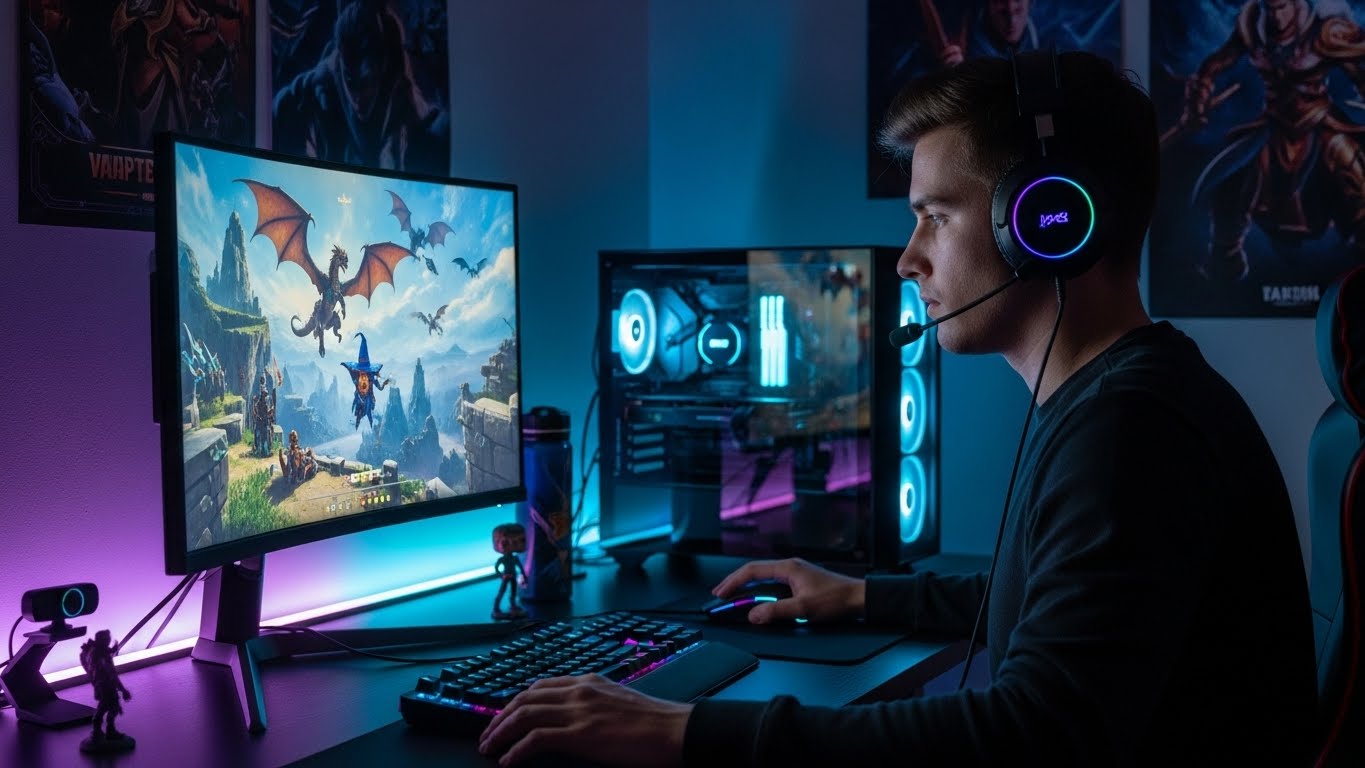
Introduction: The Evolution of Gaming
Gaming has evolved from simple pixelated screens to immersive, lifelike experiences that capture the imagination of millions worldwide. What began as a pastime for a niche group of enthusiasts has transformed into a cultural phenomenon, influencing technology, storytelling, and social interaction. The gaming industry today is not just about entertainment; it is a thriving ecosystem that blends artistry, strategy, and community. From the earliest arcade games to the most sophisticated virtual reality experiences, gaming has carved a unique place in modern culture.
The Rise of Video Games
The journey of video games started in the 1970s with basic arcade machines like Pong and Space Invaders. These games were simple in design but revolutionary in concept, offering interactive entertainment that was unlike any other medium. As technology progressed, so did the complexity of games. The 1980s and 1990s brought home consoles into households, making gaming accessible to a broader audience. Iconic franchises emerged, and storytelling began to intertwine with gameplay, giving rise to immersive worlds that players could explore.
The advent of personal computers further expanded gaming possibilities, allowing for complex simulations, strategy games, and online multiplayer experiences. Today, gaming spans across consoles, PCs, and mobile devices, ensuring that players can access their favorite games anytime, anywhere. The evolution of gaming has not only changed how people play but also how they perceive interactive entertainment as a legitimate form of art.
Gaming as a Social Experience
One of the most significant transformations in gaming is its role as a social experience. Online multiplayer games have created communities where players from different parts of the world can collaborate, compete, and form friendships. Games like MMORPGs and battle royale titles foster teamwork, strategy, and communication skills. The rise of esports has further elevated gaming from casual entertainment to a spectator sport, with tournaments drawing millions of viewers and offering substantial prize money.
Streaming platforms have also revolutionized how people engage with games. Players can watch their favorite gamers in real-time, learn strategies, and participate in live discussions. This interaction has blurred the lines between players and audiences, creating a dynamic culture where gaming is both participatory and performative. The social aspect of gaming is more than just fun; it teaches collaboration, leadership, and problem-solving skills, making it a unique form of social learning.
Gaming and Cognitive Development
Beyond entertainment and social interaction, gaming has significant cognitive benefits. Many games require strategic thinking, quick decision-making, and problem-solving. Puzzle games, strategy titles, and simulations challenge the brain in ways that traditional activities may not. Research indicates that gamers often develop improved memory, spatial awareness, and multitasking abilities. Games with complex narratives also enhance reading comprehension and storytelling skills, as players must follow intricate plots and make choices that impact outcomes.
Additionally, gaming encourages creativity. Sandbox games allow players to build, design, and experiment with virtual environments, fostering innovation and imagination. Role-playing games challenge players to adopt different perspectives and develop empathy for characters with diverse backgrounds and experiences. Far from being a passive activity, gaming actively engages cognitive functions and promotes mental agility.
The Technological Marvels Behind Modern Gaming
Modern gaming owes much of its sophistication to technological innovation. High-definition graphics, realistic physics engines, and artificial intelligence create immersive experiences that blur the line between reality and fiction. Virtual reality (VR) and augmented reality (AR) have introduced new dimensions to gaming, allowing players to step into entirely different worlds. Haptic feedback, motion sensors, and spatial audio enhance immersion, making games feel tangible and interactive.
Cloud gaming has further expanded access, allowing players to stream games without the need for expensive hardware. This technology democratizes gaming, enabling a broader audience to experience high-quality titles. The constant evolution of gaming technology reflects the industry’s commitment to pushing boundaries and redefining what interactive entertainment can be.
The Cultural Impact of Gaming
Gaming has become a significant cultural force, influencing art, music, fashion, and storytelling. Iconic game characters and narratives have entered popular culture, inspiring movies, books, and merchandise. The aesthetics of games have shaped visual trends, while soundtracks from games have gained recognition as legitimate musical compositions.
Moreover, games often reflect societal themes, exploring issues such as identity, morality, and ethics. Many modern titles incorporate narratives that challenge players to consider social justice, environmental concerns, and human relationships. By merging entertainment with meaningful storytelling, gaming has emerged as a medium capable of provoking thought and inspiring dialogue.
The Business of Gaming
The gaming industry is not only culturally significant but also economically powerful. It is one of the fastest-growing entertainment sectors globally, generating billions in revenue annually. The market encompasses console sales, software, mobile apps, accessories, and esports events. Monetization models such as subscriptions, downloadable content, and in-game purchases have revolutionized the way games generate revenue.
The rise of independent developers has also transformed the landscape, allowing creative voices to thrive outside traditional corporate structures. Indie games often experiment with unconventional narratives, unique art styles, and innovative mechanics, contributing to the diversity and richness of the gaming ecosystem. This dynamic market ensures that gaming remains both commercially viable and artistically vibrant.
Gaming and Health: Balancing Play and Wellbeing
While gaming offers cognitive, social, and cultural benefits, it is crucial to maintain a healthy balance. Excessive gaming can lead to physical strain, disrupted sleep patterns, and social isolation. Awareness of screen time, proper ergonomics, and scheduled breaks are essential for a sustainable gaming experience.
Interestingly, gaming is also being explored as a therapeutic tool. Certain games are designed to improve mental health, offering stress relief, cognitive training, and even rehabilitation exercises. The intersection of gaming and wellness highlights the medium’s versatility and potential for positive impact when approached responsibly.
Future Trends in Gaming
The future of gaming promises even more innovation and immersion. Artificial intelligence is expected to create more dynamic and responsive game worlds, adapting to individual player behavior. Virtual reality and augmented reality will continue to expand, potentially integrating with other technologies like brain-computer interfaces.
Cross-platform gaming is likely to become standard, breaking down barriers between devices and enabling seamless multiplayer experiences. Additionally, gaming communities are expected to play a more significant role in content creation, influencing game development and shaping virtual economies. The future of gaming is not just about technology; it is about creating richer, more inclusive experiences that resonate with diverse audiences.
Conclusion: Gaming as a Lifestyle
Gaming is more than a hobby; it is a lifestyle, a cultural phenomenon, and a technological marvel. It entertains, educates, and connects people in ways that few other media can. From building skills and fostering creativity to creating global communities and driving economic growth, gaming has become an integral part of modern life.
As technology evolves and the industry continues to innovate, gaming will only grow in significance. It is a medium that challenges assumptions, nurtures imagination, and celebrates diversity. Whether as a casual pastime, a competitive sport, or a creative outlet, gaming offers something for everyone. It is a journey through worlds, both virtual and real, that enriches the mind, fosters connection, and inspires endless exploration.
Gaming is not just play; it is a powerful reflection of human creativity and curiosity, and its impact will continue to shape culture, technology, and society for generations to come.