
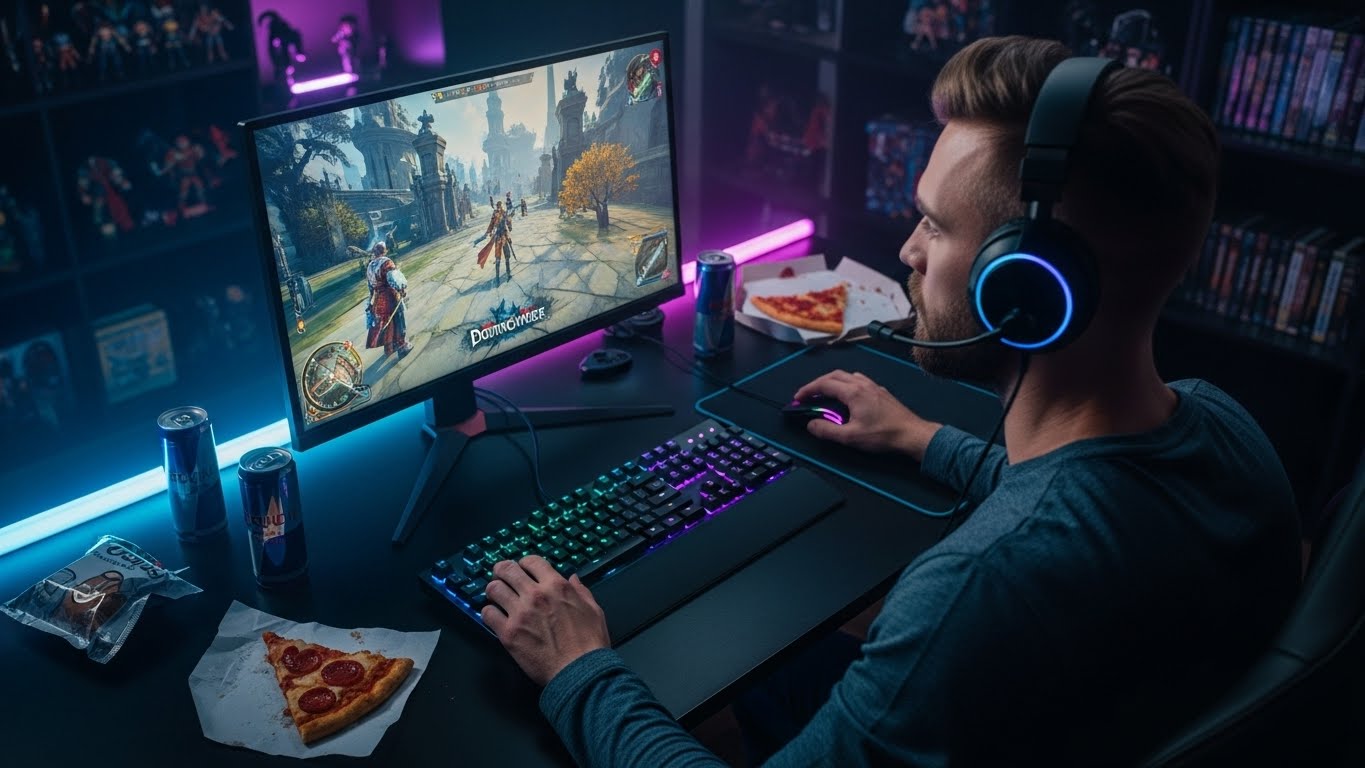
Introduction: The Growing World of Gaming
Gaming has evolved from a niche hobby into a global phenomenon that influences culture, technology, and social interaction. From casual mobile games to immersive virtual reality experiences, video games provide entertainment, challenge, and community. Gaming is not just a form of leisure—it is a dynamic industry that pushes technological boundaries, fosters creativity, and brings people together. Its impact can be seen in esports, game development, storytelling, and even education, demonstrating the broad influence of this interactive medium.
The History and Evolution of Gaming
The history of gaming spans decades, beginning with simple arcade games in the 1970s like Pong and Space Invaders. These early games introduced the world to interactive entertainment and laid the foundation for the industry. The 1980s and 1990s saw the rise of home consoles, with titles like Super Mario Bros., The Legend of Zelda, and Sonic the Hedgehog captivating audiences worldwide.
The introduction of 3D graphics in the late 1990s, along with online multiplayer capabilities, transformed gaming into a more immersive and social experience. The 2000s brought mobile gaming, downloadable content, and online marketplaces, expanding the reach and diversity of games. Today, gaming spans consoles, PCs, mobile devices, and cloud platforms, offering experiences that range from casual play to competitive esports.
Gaming as a Form of Entertainment
Gaming provides entertainment that engages players actively rather than passively. Story-driven games immerse players in narratives with complex characters and evolving plotlines. Sandbox and simulation games allow players to explore, create, and experiment in virtual worlds. Puzzle and strategy games challenge players intellectually, requiring problem-solving and critical thinking.
Unlike traditional entertainment, games offer interactivity, allowing players to influence outcomes, make decisions, and experience consequences. This active engagement creates a personalized and immersive experience, making gaming one of the most compelling forms of entertainment in the modern era.
The Social Aspect of Gaming
Gaming is increasingly a social activity. Multiplayer games, online communities, and esports tournaments allow players to connect with friends, family, and strangers around the world. Players communicate through voice chat, messaging systems, and forums, fostering collaboration and camaraderie.
Gaming communities provide a sense of identity and belonging. Shared experiences, achievements, and competitive challenges create social bonds that extend beyond the virtual world. In this way, gaming serves as a platform for social interaction, connection, and community building.
The Rise of Esports
Esports has transformed gaming into a professional and spectator-driven industry. Competitive gaming events attract millions of viewers and offer substantial prize money. Players dedicate extensive time to training, strategy, and teamwork, similar to traditional sports.
Esports has created opportunities beyond playing, including coaching, broadcasting, content creation, and event management. Streaming platforms allow fans to watch live competitions, interact with players, and celebrate achievements. The rise of esports highlights the legitimacy of gaming as a professional pursuit and its growing cultural significance.
Cognitive and Educational Benefits of Gaming
Video games provide cognitive benefits that extend beyond entertainment. Strategy and puzzle games enhance problem-solving skills, decision-making, and critical thinking. Fast-paced action games improve reflexes, attention, and spatial awareness.
Educational games offer immersive learning experiences, teaching subjects such as math, science, history, and language. Simulation games and virtual environments allow practical skill development in a risk-free setting. By combining engagement with learning, gaming can support cognitive development and foster lifelong curiosity.
Technology Driven by Gaming
Gaming has consistently driven technological innovation. Advanced graphics engines, artificial intelligence, and real-time physics simulations developed for games have applications in other industries such as healthcare, architecture, and virtual training.
Virtual reality (VR) and augmented reality (AR) gaming push boundaries in immersion, creating interactive worlds that blend digital and physical realities. Motion capture and haptic feedback technologies enhance realism and interactivity. Innovations in gaming hardware, such as high-performance consoles, gaming PCs, and peripherals, continually set new standards for technological advancement.
Diversity of Gaming Genres
The gaming industry caters to a wide range of tastes and preferences:
Action and Adventure Games: Offer exploration, challenges, and immersive storytelling.
Role-Playing Games (RPGs): Focus on character development, narrative depth, and decision-making.
Simulation and Strategy Games: Encourage creativity, planning, and problem-solving.
Sports and Racing Games: Replicate real-world competitions and athletic challenges.
Casual and Puzzle Games: Provide accessible entertainment for all ages.
This diversity ensures that gaming appeals to both casual players and hardcore enthusiasts, reflecting its broad cultural impact.
Gaming as an Economic Powerhouse
Gaming has become a multi-billion-dollar industry, generating revenue from game sales, downloadable content, in-game purchases, merchandise, and live events. Mobile gaming, console gaming, and PC gaming all contribute significantly to the global market.
The industry also supports employment in software development, design, marketing, content creation, and event management. Streaming and content creation have introduced new career opportunities, allowing gamers to earn through broadcasting and sponsorships. The economic influence of gaming extends beyond the industry, driving technology development, marketing innovation, and digital infrastructure.
Gaming and Mental Health
Gaming offers several mental health benefits when approached responsibly. Playing games can reduce stress, provide relaxation, and offer a sense of achievement. Multiplayer and cooperative games encourage social interaction, reducing feelings of isolation.
Certain games promote cognitive stimulation, problem-solving, and creativity, contributing to mental agility. Fitness-oriented games and virtual reality experiences encourage physical activity while entertaining. Responsible gaming practices, including setting time limits and balancing gameplay with other activities, help maximize mental health benefits while minimizing negative impacts.
Cultural Impact of Gaming
Gaming has become a major cultural force, influencing fashion, music, art, and social trends. Iconic characters, franchises, and in-game worlds inspire fan art, cosplay, music, and storytelling. Gaming communities create shared experiences that shape digital culture, while live streaming and social media amplify these trends globally.
Games also serve as a medium for exploring social issues, ethics, and identity. Storytelling and interactive narratives allow players to experience different perspectives, fostering empathy and understanding. Gaming culture continues to intersect with other forms of entertainment, reflecting its deep integration into modern society.
Challenges in the Gaming Industry
Despite its growth, the gaming industry faces challenges. Online toxicity, addiction, and excessive monetization can negatively impact players. Representation and inclusivity remain ongoing concerns, requiring continuous effort from developers and communities.
Piracy, fraud, and regulatory compliance also present challenges for developers and publishers. Addressing these issues is critical to maintaining a safe, ethical, and sustainable gaming environment. Innovation, transparency, and community engagement are essential for overcoming these obstacles.
The Future of Gaming
The future of gaming is set to be more immersive, interactive, and accessible. Advances in virtual reality, augmented reality, artificial intelligence, and cloud gaming will redefine player experiences. Cross-platform integration and mobile accessibility will broaden audiences, while enhanced social features will deepen community engagement.
Gaming will increasingly intersect with education, professional training, and healthcare, highlighting its potential beyond entertainment. The industry’s evolution promises a future where gaming is a universal medium for learning, social connection, and creative expression.
Conclusion: Gaming as a Transformative Force
Gaming has evolved into a powerful cultural, technological, and social force. It entertains, educates, and connects people across the globe, offering immersive experiences that extend beyond traditional media. From casual mobile games to professional esports, gaming continues to shape culture, inspire innovation, and foster community.
As technology advances and the industry adapts, gaming will remain a transformative medium, blending creativity, strategy, and social interaction. It reflects humanity’s desire for challenge, exploration, and connection, proving that gaming is more than entertainment—it is a defining feature of modern culture.