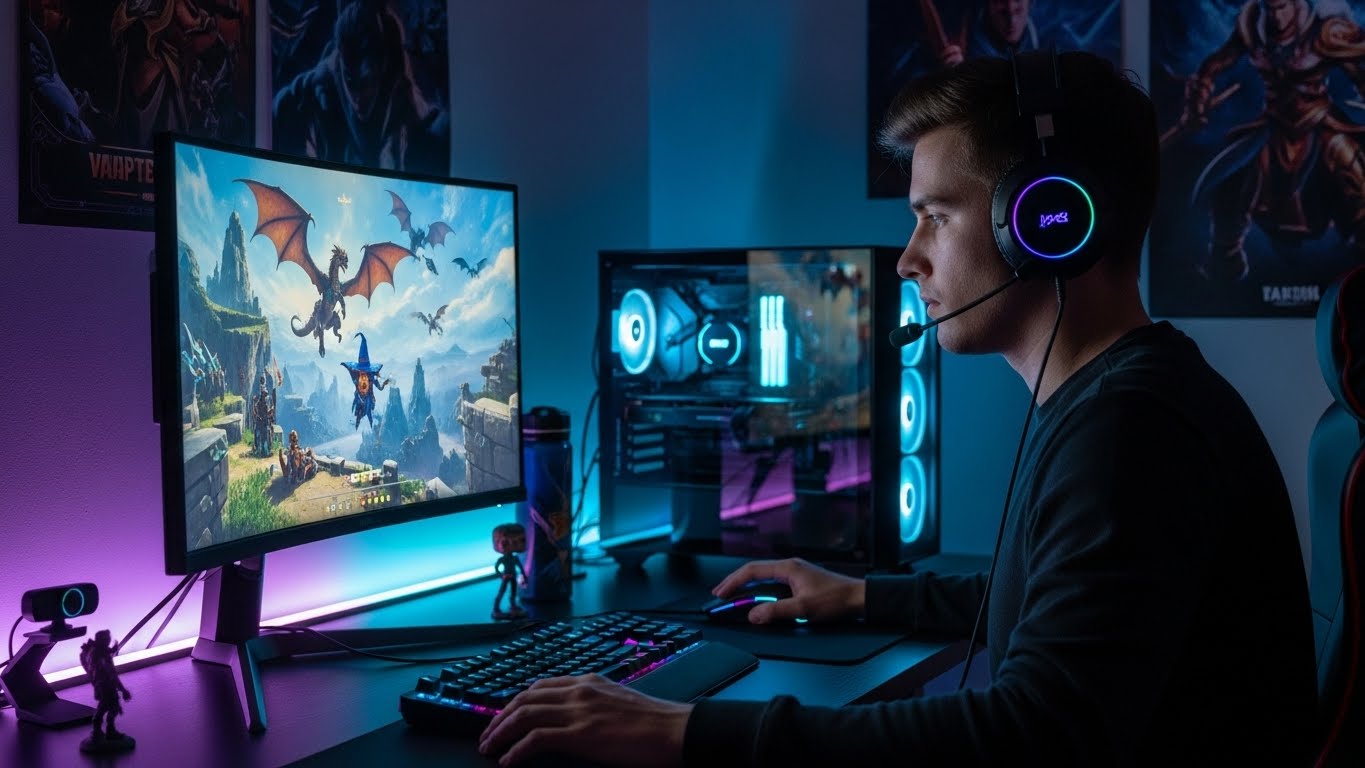
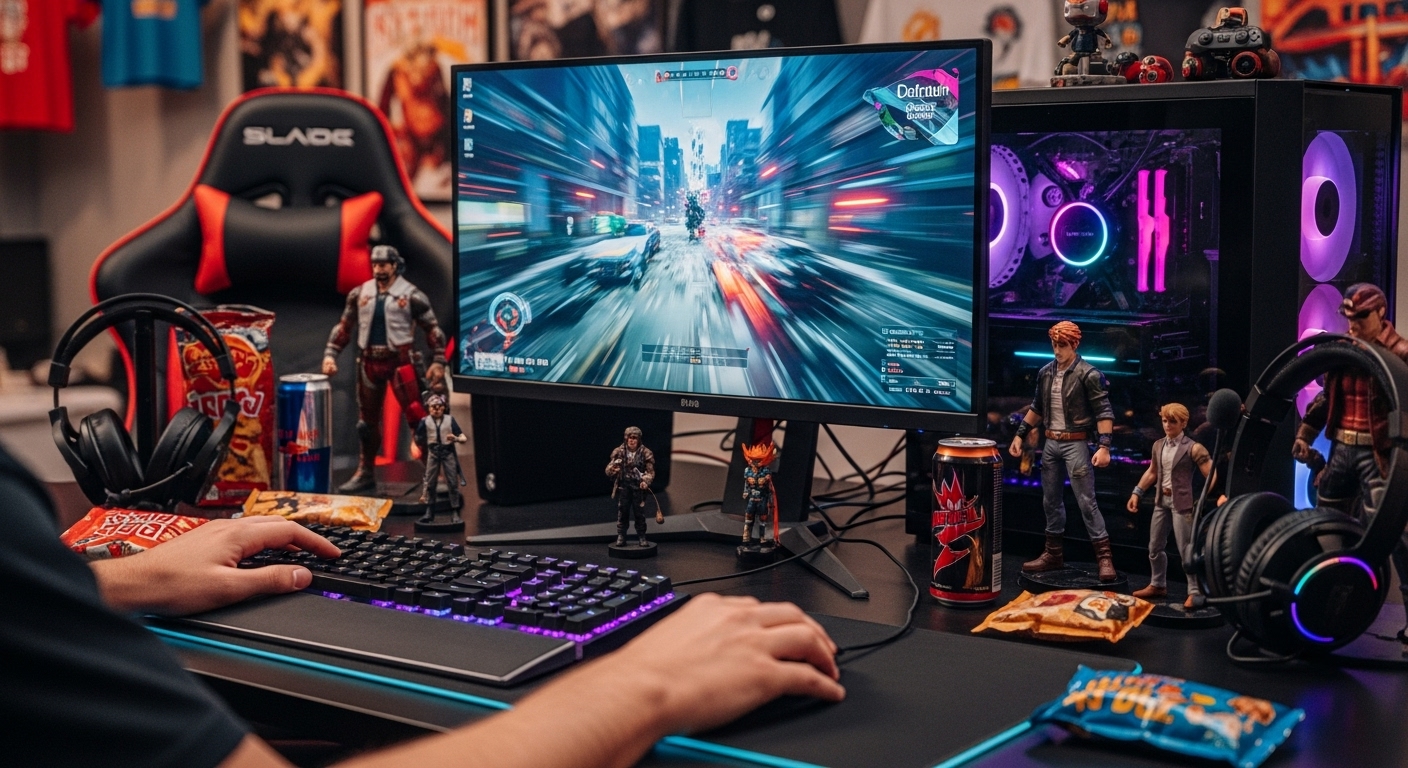
In the ever-evolving landscape of entertainment, gaming stands as one of the most transformative and influential forces. It has shaped the way we interact with technology, created entire industries, and developed into an art form of its own. From the simple pixelated visuals of the early arcade games to the immersive worlds of virtual reality (VR) and the hyper-realistic graphics of today’s titles, gaming has continuously pushed boundaries, challenging both technological limitations and the expectations of players. This post delves into the fascinating journey of gaming, its impact on culture, and where the industry is heading in the future.
The Humble Beginnings: Arcade Games and Early Consoles
In the late 20th century, gaming began its journey as an experimental pastime, often confined to arcades and the living rooms of tech enthusiasts. The first commercially successful video game, Pong (1972), was a simple two-player tennis game that captivated audiences with its straightforward yet addictive gameplay. It was rudimentary by today’s standards, yet it marked the beginning of something monumental: the birth of an entirely new form of entertainment.
Shortly after, consoles like the Atari 2600 and the Nintendo Entertainment System (NES) began making their way into homes, offering gamers the ability to enjoy video games without needing to leave their homes. The graphics were still pixelated, and the sound effects were minimal, but the idea of interactive entertainment was revolutionary. Early games like Space Invaders, Pac-Man, and Super Mario Bros. became iconic, establishing gaming as a cultural force that would only grow in influence over the years.
While these early games may seem basic now, they were foundational in shaping the gaming experience. Developers had to work with limited resources, making the most out of the hardware available to them. Yet, they created experiences that were captivating, challenging, and, most importantly, fun. These were the building blocks of the gaming industry as we know it today.
The Rise of Home Consoles and 3D Graphics
As technology advanced, so did the complexity of video games. In the 1990s, the rise of 3D graphics marked a turning point in gaming. Consoles like the Sony PlayStation and the Sega Saturn brought more advanced graphical capabilities, allowing for a deeper sense of immersion. Games like Final Fantasy VII, Super Mario 64, and GoldenEye 007 introduced players to fully realized 3D worlds, offering a new dimension of exploration and interaction.
For the first time, players could move through virtual environments with greater freedom, and developers began experimenting with more complex narratives. The focus shifted from just gameplay to creating stories, characters, and worlds that players could invest in emotionally. This era saw the birth of some of the most beloved franchises in gaming history, such as The Legend of Zelda, Metal Gear Solid, and Resident Evil, all of which are still relevant today.
These advances in graphics and gameplay mechanics were not just technological feats—they were cultural milestones. Gaming was no longer a niche hobby; it was becoming a global phenomenon. The industry was growing rapidly, with millions of people embracing gaming as their preferred form of entertainment.
The Internet Era: Online Gaming and the Birth of E-Sports
The next major shift in the gaming world came with the advent of the internet. By the late 1990s and early 2000s, online multiplayer games began to emerge, bringing a whole new layer to the gaming experience. Titles like StarCraft, Quake III Arena, and Warcraft III introduced players to the concept of online competition, where gamers from all over the world could connect and battle it out in real-time.
This revolutionized not only how people played but also how they socialized. No longer were gamers confined to their local communities or single-player experiences. The internet opened the doors for a truly global gaming community, where players could communicate, form friendships, and compete with others at any time of day or night. It was a new era of interconnectedness, where the boundaries between people and places became irrelevant.
Online gaming also led to the creation of e-sports—the professional competitive gaming scene. Games like League of Legends, Counter-Strike, and Dota 2 became the backbone of a multi-million-dollar industry. Today, e-sports are watched by millions of fans, with tournaments held in arenas, broadcasted on TV, and streamed on platforms like Twitch and YouTube. The professionalization of gaming created a new career path for talented players, commentators, analysts, and streamers, further cementing gaming’s place as a cultural and economic powerhouse.
The Age of Mobile Gaming and Free-to-Play Models
As smartphones and tablets became ubiquitous in the 2010s, mobile gaming emerged as one of the most significant developments in the gaming world. Games like Angry Birds, Candy Crush, and Pokémon GO introduced casual gaming to a broader audience, bringing video games to people who might never have considered picking up a console or PC. The accessibility of mobile games, combined with the ability to play on the go, led to an explosion in the popularity of gaming, particularly among younger and more casual players.
Along with the rise of mobile gaming came the rise of the free-to-play (F2P) model. In contrast to traditional games that required an upfront purchase, free-to-play games allowed players to download and play the game without spending any money. Instead, they could make in-game purchases, either for cosmetic items or to speed up their progress. This model proved incredibly successful, with games like Fortnite and Clash of Clans earning billions of dollars through microtransactions.
While the F2P model has been controversial at times due to its emphasis on in-game purchases, it has undoubtedly contributed to the expansion of the gaming industry. Free-to-play games have attracted millions of players worldwide, making gaming more accessible than ever before. This model has also encouraged innovation in game design, with developers experimenting with new ways to engage and monetize players.
Virtual Reality and Augmented Reality: The Next Frontier
As we look to the future of gaming, one of the most exciting developments is the growth of virtual reality (VR) and augmented reality (AR) technologies. While VR gaming has been around for several years, it has gained significant traction in recent times with devices like the Oculus Rift, HTC Vive, and PlayStation VR. These devices allow players to step into fully immersive 3D worlds, where they can physically interact with the environment and experience games in a way that was previously unimaginable.
The possibilities for VR gaming are immense. From exploring alien planets in No Man’s Sky to surviving a zombie apocalypse in The Walking Dead: Saints & Sinners, VR offers a level of immersion that traditional gaming can’t match. With advancements in haptic feedback, motion tracking, and visual fidelity, VR is quickly becoming a serious contender for the future of gaming.
Meanwhile, augmented reality (AR) has taken gaming to the real world, with games like Pokémon GO and Ingress blending the digital and physical worlds. AR gaming encourages players to go outside, interact with their surroundings, and experience games in new and unexpected ways. The potential for AR is still in its early stages, but as smartphones and AR glasses improve, it’s likely that we’ll see even more innovative AR gaming experiences in the future.
The Future of Gaming: AI, Cloud Gaming, and Beyond
Looking even further ahead, there are several emerging technologies that could revolutionize the gaming industry. One of the most significant developments is the rise of artificial intelligence (AI) in gaming. AI can be used to create more intelligent and responsive non-playable characters (NPCs), generate dynamic storylines, and improve game design. AI-driven games could offer players experiences that are unique to them, with ever-changing narratives and gameplay that adapts to their style.
Cloud gaming is also poised to change the way we play. Services like Google Stadia, Xbox Cloud Gaming, and NVIDIA GeForce Now allow players to stream games directly to their devices, eliminating the need for expensive gaming hardware. Cloud gaming could make high-quality games more accessible to a broader audience, as long as internet speeds and infrastructure continue to improve.
Finally, as gaming continues to evolve, it’s likely that the line between different forms of entertainment will continue to blur. With advances in VR, AR, and AI, gaming could soon incorporate elements of film, music, and even social media, creating a new type of immersive experience. The future of gaming is wide open, and the possibilities are limited only by the imagination of developers and the technology they can harness.
Conclusion: Gaming as a Cultural and Technological Force
From its humble beginnings as a simple pastime to its current status as a global entertainment juggernaut, gaming has come a long way. It has not only transformed how we play but also how we interact with technology, each other, and even the world around us. The gaming industry is constantly evolving, with new technologies, gameplay experiences, and cultural shifts shaping its future.
As we move into the next era of gaming, we can expect even more innovation and excitement. Virtual reality, artificial intelligence, cloud gaming, and augmented reality are just the tip of the iceberg. Gaming is no longer just a form of entertainment; it is an integral part of our cultural landscape, and its influence will only continue to grow in the years to come. Whether you’re a casual gamer or a dedicated enthusiast, one thing is clear: the world of gaming is more dynamic, diverse, and exciting than ever before.