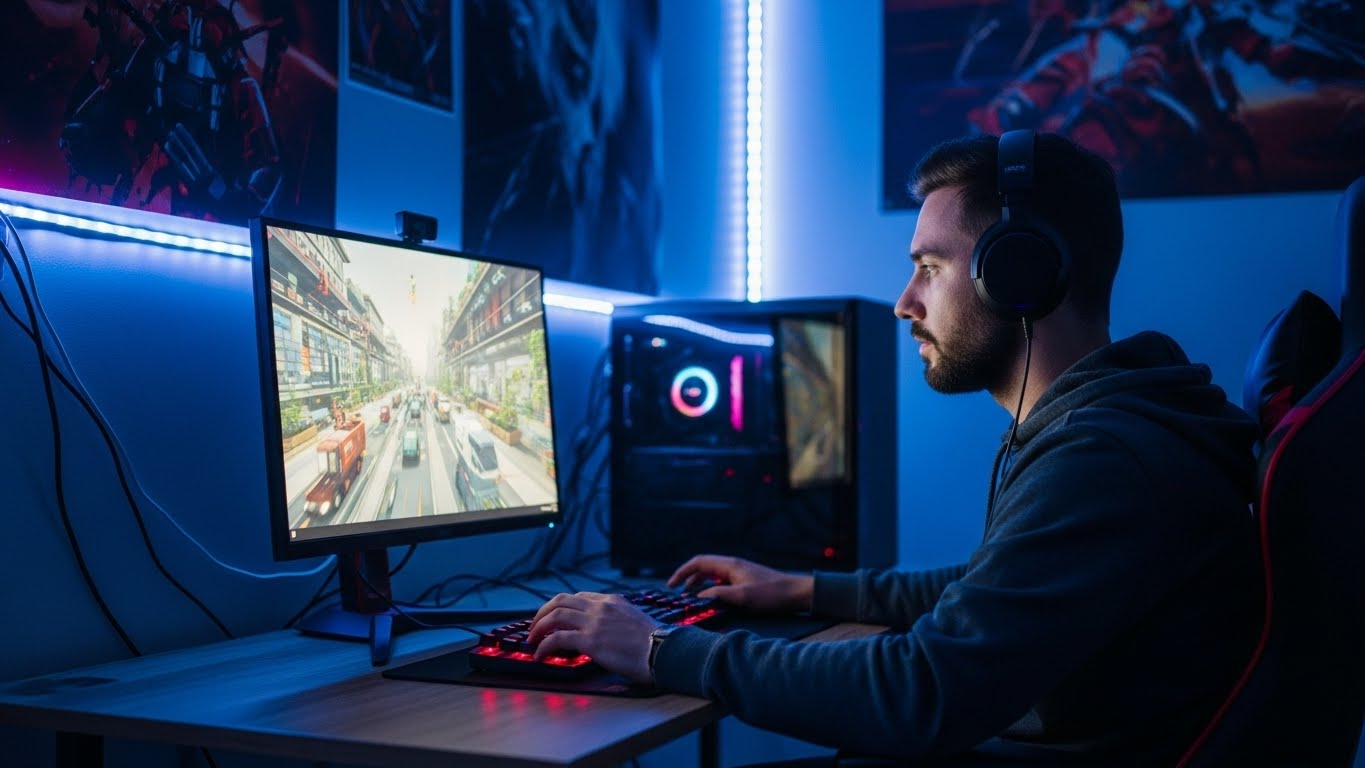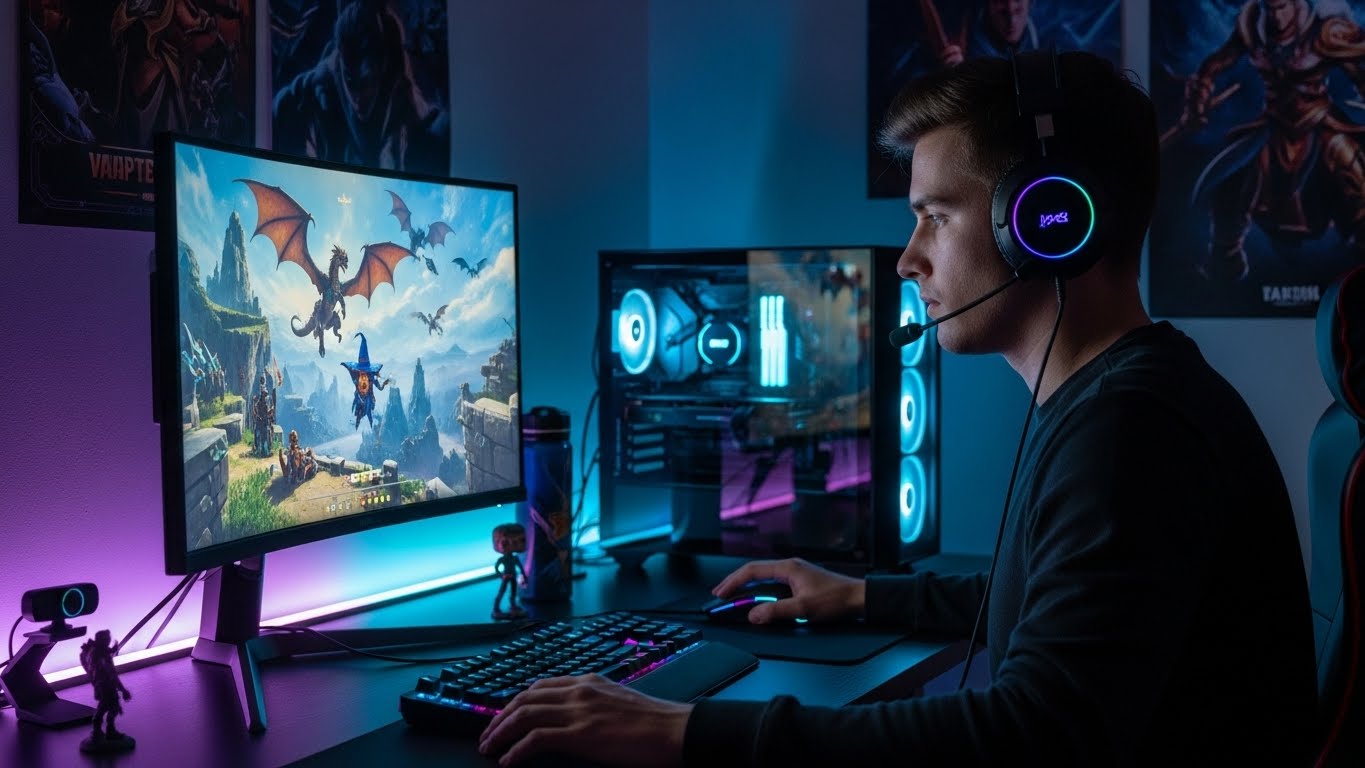

Gaming has evolved dramatically over the past few decades. What was once seen as a niche hobby for a small group of enthusiasts has now transformed into a mainstream cultural phenomenon. Whether you’re someone who plays for fun, an aspiring eSports athlete, or a dedicated streamer, gaming offers a vast and varied experience for everyone. This blog post explores the multifaceted world of gaming, delving into its evolution, its appeal, and the diverse communities it has created.
The Evolution of Gaming
When video games first emerged in the 1970s and 1980s, they were relatively simple in both design and gameplay. Games like Pong and Space Invaders were revolutionary for their time, offering people a new way to engage with entertainment. However, early gaming was mostly confined to arcades or personal computers, and the graphics, sound, and storytelling were relatively basic.
As the years went by, gaming technology improved. In the 1990s, consoles like the Sony PlayStation and the Nintendo 64 brought home gaming into the mainstream. The leap in graphics and the ability to play against friends in the same room introduced a new level of interaction. With the advent of online gaming in the late 1990s and early 2000s, the gaming landscape changed yet again. Titles like Counter-Strike, World of Warcraft, and Halo paved the way for global multiplayer games that connected players from all corners of the world.
Fast forward to today, and gaming is an industry worth billions of dollars. From massive open-world games like The Witcher 3 to competitive shooters like Call of Duty, the diversity in gaming experiences has never been greater. Virtual reality (VR) and augmented reality (AR) are pushing the boundaries of immersion, while cloud gaming platforms are making high-quality games accessible to people with less powerful hardware.
Casual Gaming: Entertainment for All
One of the biggest reasons for the rise of gaming is its accessibility. Games today can be played on a variety of devices: consoles, PCs, mobile phones, and even smart TVs. Casual gaming, which appeals to a broad demographic, is now more popular than ever. Games like Candy Crush, Angry Birds, and Clash of Clans have become household names, with millions of players worldwide.
These games are typically easy to pick up and play, offering a quick and enjoyable experience for people with limited time. The addictive nature of many mobile games also plays a significant role in their popularity. Casual gaming allows individuals to engage with gaming in a low-pressure environment, without the need for deep investment in time or money.
For some, casual gaming is a way to relax after a long day of work or school. For others, it provides a sense of accomplishment and progression, even if it’s just through completing a few levels or earning in-game rewards. The social aspect of mobile games also plays a key role in their success, as many games allow players to connect with friends and family through leaderboards, challenges, or in-game messaging.
Competitive Gaming: The Rise of eSports
While casual gaming has a broad appeal, competitive gaming, also known as eSports, has seen explosive growth in recent years. eSports refers to organized, multiplayer video game competitions, particularly between professional players, individually or as teams. What was once a hobby for niche communities has now become a multi-billion-dollar industry with millions of viewers around the world.
The rise of eSports has led to the formation of professional leagues and tournaments for games like League of Legends, Dota 2, Fortnite, Overwatch, and Counter-Strike: Global Offensive. These competitions offer substantial prize money, sponsorships, and media coverage, making it a viable career option for talented players.
eSports is not just about playing the game—it’s about creating a spectacle. Tournaments are often broadcast on streaming platforms like Twitch and YouTube, where fans tune in to watch their favorite players and teams battle it out. The level of competition is intense, and the skill required to succeed at the highest levels is on par with traditional sports. The most successful eSports players can make a living from their gaming skills, with some even securing lucrative sponsorships and brand deals.
Beyond individual players, entire teams and organizations have emerged, with coaching staffs, analysts, and support systems similar to those in professional sports. The sense of community within the eSports world is strong, with fans forming loyalty to specific teams or players. These events draw large crowds and sell-out arenas, a testament to how mainstream eSports has become.
The Impact of Streaming and Content Creation
One of the most fascinating aspects of modern gaming is the rise of content creation. Thanks to platforms like Twitch, YouTube, and Facebook Gaming, gamers have the opportunity to stream their gameplay, create content, and build audiences. This has led to a new wave of celebrities in the gaming world—individuals who can make a living through gaming and its related activities.
Streamers, or people who broadcast their gameplay live, often engage with their audience through commentary, humor, and interaction. The appeal of watching others play video games lies in the unique personalities and skill sets of the streamers. Some people watch for the entertainment value, while others watch to learn tips and tricks for their own gameplay. Popular streamers like Ninja, PewDiePie, and Pokimane have millions of followers, and many make substantial income from their streams, merchandise sales, and sponsorship deals.
The rise of YouTube as a platform for gaming content has also created opportunities for gamers to produce edited videos, playthroughs, and reviews. Content creation is no longer limited to professional streamers—it’s a career path that anyone can pursue. This has led to a democratization of the gaming industry, where anyone with talent and a strong online presence can find success.
Streaming and content creation have also made gaming more social than ever before. Fans can interact with their favorite streamers, ask questions, or cheer them on in real-time. The community that forms around streamers often extends to Discord servers, social media, and fan events, creating a deeper connection between players and their audiences.
Gaming Communities: More Than Just Playing Games
One of the most profound aspects of gaming is the sense of community it fosters. Online multiplayer games, in particular, allow people from different walks of life to connect, collaborate, and compete. These virtual spaces often transcend borders, bringing together individuals who may not have met otherwise.
Gaming communities can be incredibly supportive, with players sharing strategies, tips, and experiences. Forums, Reddit threads, and Discord servers have become gathering places where players bond over shared interests. For some, these communities are a source of social connection, especially for those who may feel isolated in the offline world.
However, gaming communities are not without their challenges. Toxicity and harassment, particularly in competitive gaming environments, are persistent issues. Many developers and community managers work hard to foster inclusive and respectful communities, but this remains a work in progress. As gaming continues to evolve, there is a growing recognition of the need for better moderation, player education, and support systems within these communities.
The Future of Gaming: What’s Next?
Looking ahead, the future of gaming is incredibly exciting. As technology continues to evolve, we can expect even more immersive experiences. Virtual reality (VR) and augmented reality (AR) are already changing the way we interact with games, allowing players to step into fully realized virtual worlds. VR headsets, like the Oculus Rift and PlayStation VR, provide players with the sensation of being inside their favorite games, offering a level of immersion previously thought impossible.
Cloud gaming is another trend that’s reshaping the industry. With platforms like Google Stadia, NVIDIA GeForce Now, and Xbox Cloud Gaming, players can stream high-quality games without needing a powerful gaming PC or console. This opens up gaming to a wider audience and reduces the barriers to entry.
Additionally, the rise of artificial intelligence (AI) and machine learning has the potential to create more dynamic and intelligent in-game opponents, making single-player experiences more engaging. AI could also lead to more personalized gaming experiences, tailoring games to suit individual preferences and playstyles.
In the realm of eSports, we can expect the industry to continue growing, with larger tournaments, bigger prize pools, and even more mainstream media coverage. As gaming continues to intersect with traditional sports, we may even see esports featured in the Olympics or other global events in the future.
Conclusion
The world of gaming is a vast, ever-changing landscape that continues to captivate millions of players around the world. From casual mobile games to high-stakes eSports competitions, gaming has something for everyone. Its evolution has not only shaped the way we play but also how we interact with others, form communities, and consume content. As technology advances, so too will the gaming industry, offering new experiences and opportunities for players to explore.
Ultimately, gaming is more than just a form of entertainment—it’s a cultural force, a way to connect, compete, and create. Whether you’re a casual player or a professional gamer, the future of gaming is bright and filled with endless possibilities.