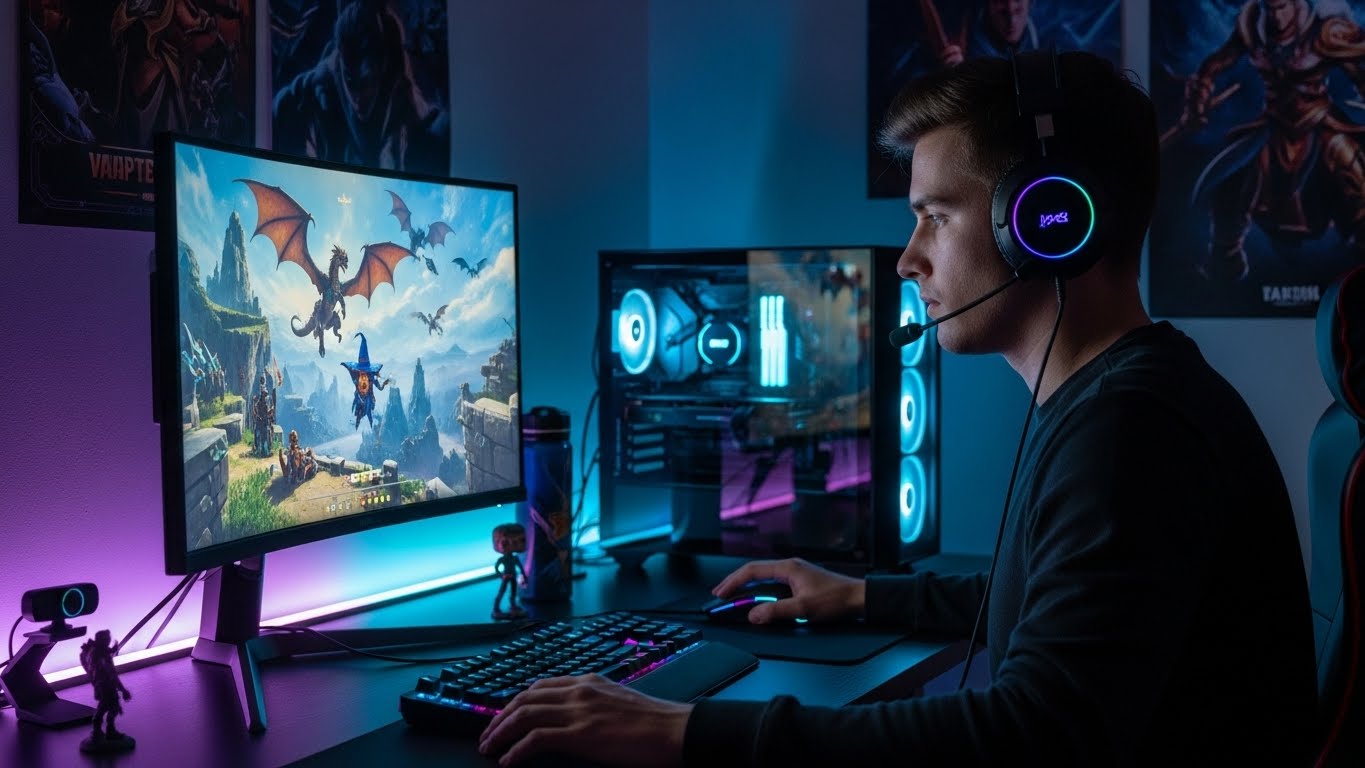
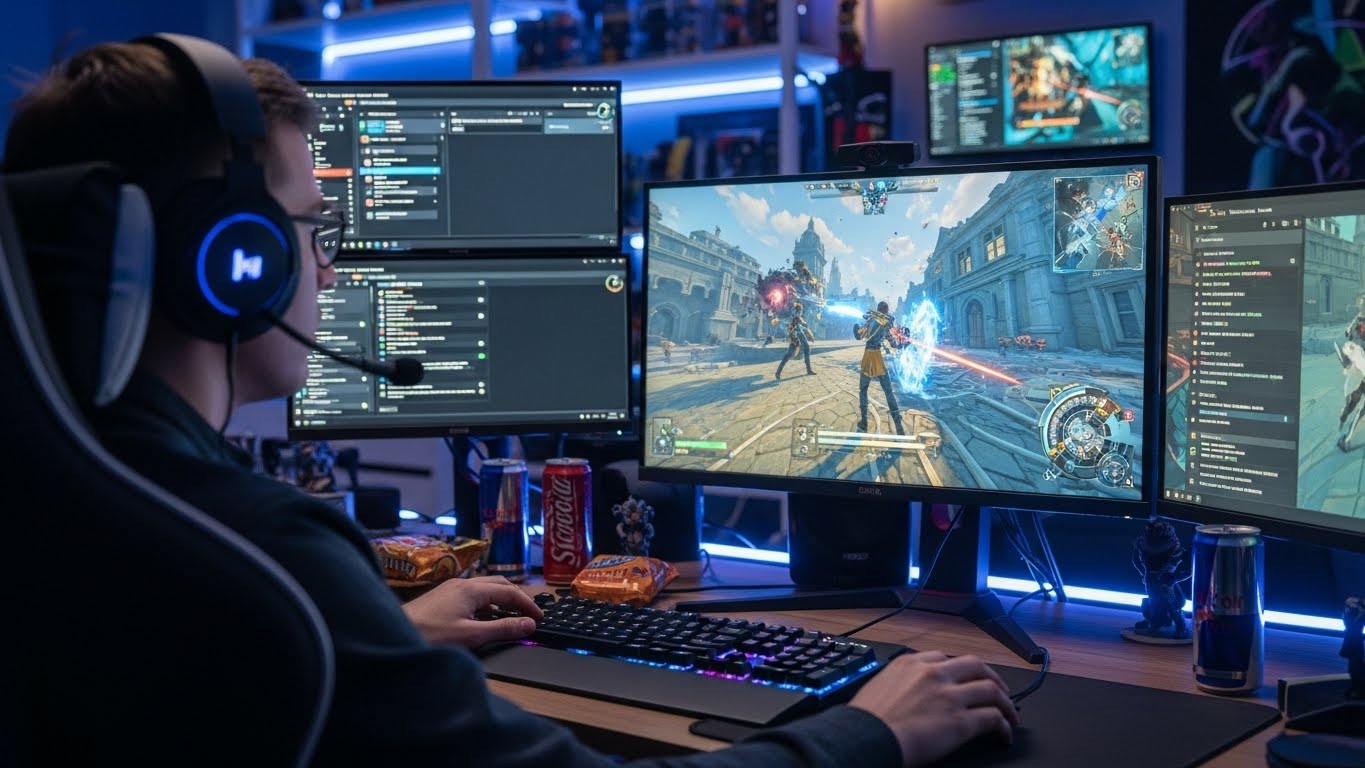
Gaming has grown far beyond a simple form of entertainment. Today, it is a cultural phenomenon, a creative outlet, and a technological frontier. From the early days of arcade machines to the immersive virtual realities of today, gaming has transformed how people interact, learn, and experience storytelling. This blog explores the evolution of gaming, its social and cognitive impact, its role in mental well-being, and its future in shaping society.
The Origins of Gaming: A Simple Beginning
The history of gaming begins with simple, pixelated experiences that captivated audiences in ways that were previously unimaginable. Games such as Pong, Space Invaders, and Pac-Man were basic in design but revolutionary in their interactive nature. These early games introduced players to the concept of engagement, challenge, and achievement within a digital environment.
Arcades became hubs of social interaction, where people competed for high scores and shared strategies. The transition from arcade machines to home consoles like the Nintendo Entertainment System and Sega Genesis brought gaming into living rooms. Families and friends could now share experiences, turning gaming into a collective cultural activity rather than an isolated pastime.
Technological Evolution: From Pixels to Realism
The technological advancement in gaming has been staggering. Early games relied on 2D graphics and limited sound effects, but modern games offer photorealistic visuals, dynamic worlds, and complex physics systems. Players can now explore vast landscapes, interact with intelligent non-player characters, and immerse themselves in narrative-driven experiences that rival movies.
Artificial intelligence has enhanced gameplay by making opponents and environments more responsive. Online multiplayer games have transformed gaming into a global phenomenon, connecting millions of players in real time. Virtual reality and augmented reality now allow players to step into fully interactive worlds, making experiences more immersive and engaging than ever before.
The Social Dimension of Gaming
Gaming has become a powerful social tool. Multiplayer games and online platforms allow players to collaborate, compete, and communicate with individuals across the globe. These interactions create bonds, friendships, and shared experiences that extend beyond the digital realm.
Gaming communities provide a sense of belonging. Players engage in discussions, tournaments, fan art, and live streams, creating vibrant ecosystems around games. Team-based gameplay fosters communication, leadership, and strategic thinking, teaching skills that can be applied in real-life collaboration and problem-solving. The social impact of gaming is profound, as it connects people across cultures and geographic boundaries.
Cognitive Benefits of Gaming
Gaming is often misunderstood as a passive activity, but many games offer significant cognitive benefits. Strategy games challenge players to manage resources, anticipate opponents’ moves, and develop long-term plans. These experiences enhance critical thinking, decision-making, and problem-solving abilities.
Action games improve hand-eye coordination, reaction time, and attention to detail. Puzzle games encourage logic, patience, and persistence, while role-playing games enhance memory, planning, and narrative comprehension. Open-world and sandbox games stimulate creativity, allowing players to design environments, craft stories, and experiment with imaginative solutions. These cognitive skills often extend beyond gaming into education, work, and daily life.
Emotional Engagement and Storytelling
One of the most unique aspects of gaming is its ability to create emotional engagement. Unlike movies or books, players are active participants, making choices that influence the outcome of the narrative. This interactivity fosters a personal connection with the story and its characters.
Games explore themes such as morality, identity, perseverance, and empathy. Players experience a wide range of emotions, including joy, frustration, sadness, and triumph, all of which contribute to personal growth and self-reflection. Gaming also provides a healthy form of escapism, allowing individuals to explore alternative realities, confront challenges, and achieve goals in safe and controlled environments.
Gaming as a Career and Industry
Gaming has transformed into a massive industry, generating billions in revenue worldwide. The rise of esports has elevated gaming to a professional level. Players train rigorously, participate in global tournaments, and achieve recognition comparable to traditional sports athletes.
Beyond playing, gaming offers careers in development, design, programming, storytelling, animation, sound design, and community management. Game developers blend technology, art, and narrative to create immersive experiences. Streaming platforms allow players to build audiences, create content, and monetize their skills, making gaming a viable and respected career path.
The gaming industry has become a major economic and cultural force, influencing media, technology, and entertainment while providing creative and professional opportunities to millions worldwide.
Mental Well-Being and Gaming
Responsible gaming can have positive effects on mental health. Games offer stress relief, relaxation, and a sense of accomplishment. Completing challenges, mastering skills, and progressing through levels boost self-confidence and motivation.
Social gaming reduces feelings of loneliness by fostering interaction and collaboration. Multiplayer games provide opportunities for social connection and teamwork, offering emotional support for individuals who may feel isolated. Therapeutic games are also emerging, designed to improve focus, emotional resilience, and cognitive skills. Gaming can thus contribute to mental well-being when balanced with other aspects of life.
Creative Expression Through Gaming
Gaming is a platform for creativity, both for players and developers. Many games allow users to create custom levels, design characters, and craft stories within the game world. This participatory element turns gaming into a form of digital art and self-expression.
Developers combine music, storytelling, design, and technology to create engaging and innovative experiences. Players extend these experiences through mods, fan-made content, and creative gameplay, fostering a culture of collaboration and innovation. Gaming communities thrive on creativity, imagination, and shared experiences, continuously driving the evolution of the medium.
The Future of Gaming
The future of gaming is filled with possibilities. Virtual reality and augmented reality will create increasingly immersive and interactive experiences. Artificial intelligence will allow for adaptive worlds and responsive gameplay. Cloud gaming will make high-quality experiences accessible to a broader audience without expensive hardware.
Educational and professional applications of gaming are expanding, using interactive simulations and gamification to enhance learning and skill development. As technology continues to advance, gaming will remain a driving force in culture, creativity, and human interaction, shaping the way people work, learn, and socialize.
Conclusion: Gaming as a Cultural Phenomenon
Gaming has evolved into more than just entertainment. It is a cultural phenomenon that fosters creativity, builds cognitive and social skills, encourages emotional engagement, and provides professional opportunities. Communities around games connect people globally, while professional gaming and industry growth demonstrate its economic and cultural impact.
From casual players exploring virtual worlds to professional esports athletes competing on the global stage, gaming challenges the mind, inspires creativity, and strengthens social connections. It is not just a hobby but a lens through which modern society experiences innovation, collaboration, and imagination.
Gaming is a testament to human ingenuity, offering experiences that entertain, educate, and unite people worldwide. It continues to shape modern life, culture, and the future in ways that are as limitless as the worlds it creates.