
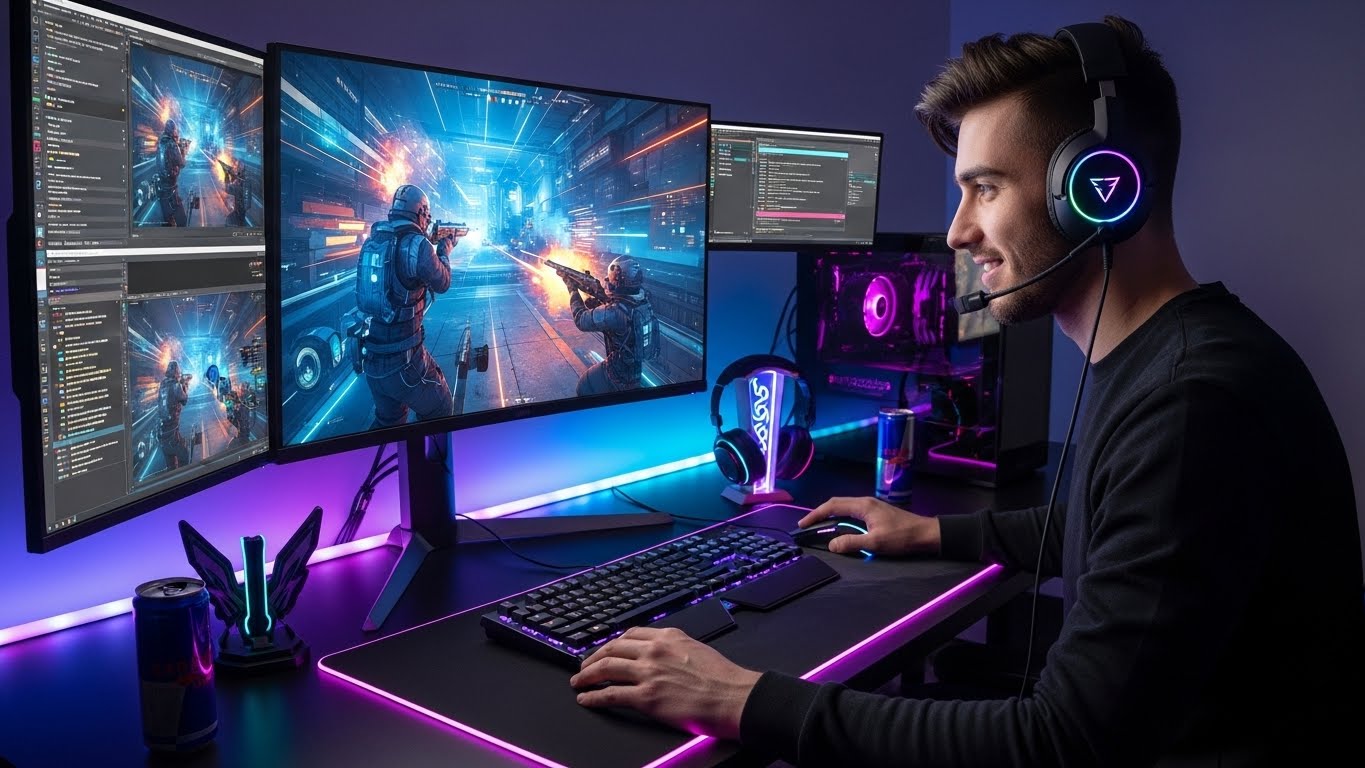
Introduction: The Cultural Power of Gaming
Gaming has grown far beyond its origins as a form of simple entertainment. Today, it is a global phenomenon, influencing culture, social interaction, and even technology development. Video games provide immersive experiences that challenge players intellectually, emotionally, and socially. From casual mobile games to competitive esports tournaments, gaming shapes the way people connect, learn, and engage with digital media. Its evolution reflects broader trends in society, highlighting the interplay between creativity, technology, and human interaction.
The History of Gaming
The history of gaming stretches back to the early 1970s, when arcade games like Pong and Space Invaders introduced people to interactive digital entertainment. The 1980s saw the rise of home consoles, bringing games such as Pac-Man and Super Mario Bros. into households worldwide. These games laid the foundation for immersive storytelling, strategic gameplay, and multiplayer experiences.
The 1990s and 2000s marked the era of 3D graphics, expansive game worlds, and online connectivity. Titles like The Legend of Zelda, Final Fantasy, and Counter-Strike transformed gaming into a complex and competitive medium. Today, gaming continues to innovate with virtual reality, augmented reality, and cloud gaming, reflecting the medium’s ongoing evolution and influence.
Gaming as a Form of Entertainment
At its core, gaming is entertainment, offering experiences that go beyond passive observation. Unlike movies or television, games engage players actively, requiring decision-making, problem-solving, and skill. Story-driven games allow players to explore rich narratives, complex characters, and intricate worlds. Sandbox and simulation games give players creative freedom to build, explore, and experiment.
The entertainment value of gaming also lies in its interactivity. Players’ choices shape outcomes, creating personalized experiences that foster immersion and emotional investment. This active engagement makes gaming one of the most compelling forms of entertainment in the modern digital era.
The Social Aspect of Gaming
Gaming is inherently social. Multiplayer games, online communities, and esports tournaments allow people to connect, collaborate, and compete. Social interaction in games ranges from casual cooperative play with friends to international competitions watched by millions of spectators.
Gaming communities provide a sense of belonging and identity. Players discuss strategies, share achievements, and form friendships across the globe. Social gaming strengthens bonds, fosters teamwork, and creates shared experiences that extend beyond the virtual world.
The Rise of Esports
Esports, or competitive gaming, has transformed gaming into a professional and spectator-driven industry. Tournaments for games like League of Legends, Dota 2, and Counter-Strike attract massive audiences and offer significant prize money. Professional players dedicate hours daily to practice, strategy, and performance optimization, similar to traditional athletes.
Esports also generates economic opportunities. Teams, event organizers, broadcasters, and content creators contribute to a vibrant ecosystem. The popularity of esports highlights gaming’s legitimacy as a competitive and professional pursuit, further cementing its cultural impact.
Gaming and Cognitive Development
Video games can offer cognitive benefits, challenging players’ problem-solving abilities, strategic thinking, and decision-making skills. Puzzle games, strategy titles, and role-playing games require planning, adaptability, and critical thinking. Fast-paced action games enhance reaction time, attention, and spatial awareness.
Educational games and simulations provide practical learning experiences. These games teach skills ranging from mathematics and science to history and language. By combining engagement with intellectual stimulation, gaming can support cognitive development and lifelong learning.
Technological Innovation Driven by Gaming
Gaming has consistently driven technological innovation. Advances in graphics, artificial intelligence, and physics engines developed for video games have applications beyond entertainment. Virtual reality, motion capture, and real-time rendering technologies pioneered by the gaming industry are now used in healthcare, education, and architecture.
Game development pushes the boundaries of computing power, network infrastructure, and hardware capabilities. Innovations designed to improve gaming experiences often influence broader technological trends, demonstrating the medium’s role as a driver of progress.
Diversity of Gaming Genres
The gaming industry is diverse, catering to a wide range of interests and preferences.
Action and Adventure Games provide excitement, exploration, and narrative-driven experiences.
Role-Playing Games (RPGs) immerse players in complex worlds and character development.
Simulation and Strategy Games encourage planning, critical thinking, and creative problem-solving.
Sports and Racing Games replicate real-world competitions and physical skill challenges.
Puzzle and Casual Games offer accessible entertainment suitable for players of all ages.
This diversity ensures that gaming appeals to broad audiences, from casual players to hardcore enthusiasts, reflecting the medium’s flexibility and cultural reach.
Gaming as an Economic Powerhouse
Gaming is a multi-billion-dollar industry, generating revenue through game sales, in-game purchases, subscriptions, and merchandising. Mobile gaming, console games, and PC titles all contribute to a vast global market. The industry also supports job creation, including game developers, designers, artists, marketers, and event organizers.
Streaming platforms and content creation further expand gaming’s economic impact. Popular streamers, influencers, and content creators monetize their gameplay, creating new career opportunities. Gaming has become a powerful economic force, driving innovation, entertainment, and entrepreneurship worldwide.
Health and Wellness in Gaming
While gaming is often associated with sedentary behavior, it can support mental and emotional well-being. Games provide stress relief, relaxation, and a sense of accomplishment. Cooperative and competitive gaming fosters social connections, reducing isolation and enhancing community engagement.
Physical activity can also be integrated through motion-controlled and virtual reality games. Fitness-focused titles encourage movement, coordination, and exercise, blending entertainment with health benefits. Moderation and responsible gameplay are essential to maximize these benefits while avoiding negative consequences.
The Impact of Gaming on Culture
Gaming influences culture in profound ways. Iconic characters, game worlds, and narratives inspire movies, books, art, and music. Gaming culture shapes fashion, social trends, and online communities, creating shared cultural references.
Moreover, gaming fosters creativity and storytelling. Many players engage in fan art, modding, and game design, contributing to the broader cultural ecosystem. The influence of gaming extends beyond digital screens, shaping entertainment, expression, and social identity.
Challenges Facing the Gaming Industry
Despite its many benefits, gaming faces challenges. Concerns include addiction, online toxicity, and over-commercialization. Excessive screen time, microtransactions, and aggressive monetization practices can negatively impact players’ health and well-being.
The industry also contends with issues of representation and inclusivity. Ensuring diverse characters, accessible gameplay, and safe online spaces are ongoing priorities. Addressing these challenges is essential for sustainable growth and a positive gaming environment.
The Future of Gaming
The future of gaming is poised for even greater innovation. Virtual reality, augmented reality, and cloud gaming will enhance immersion and accessibility. Artificial intelligence will create smarter non-player characters, dynamic worlds, and personalized experiences.
Cross-platform play and mobile accessibility will broaden audiences, while social integration and streaming will deepen community engagement. Gaming is likely to intersect further with education, professional training, and healthcare, extending its relevance beyond entertainment. The future promises a world where gaming continues to evolve, inspire, and connect people globally.
Conclusion: Gaming as a Cultural and Technological Force
Gaming is far more than a pastime; it is a cultural, social, and technological powerhouse. It challenges minds, builds communities, and drives innovation across industries. From casual mobile experiences to competitive esports, gaming engages millions worldwide and shapes the way people interact with technology, culture, and each other.
As the industry evolves, gaming will continue to expand its influence, offering immersive experiences, educational opportunities, and social connections. It reflects humanity’s creativity, adaptability, and desire for connection, proving that video games are a defining feature of modern culture. The world of gaming is dynamic, inclusive, and transformative, illustrating the boundless potential of human imagination and technology.