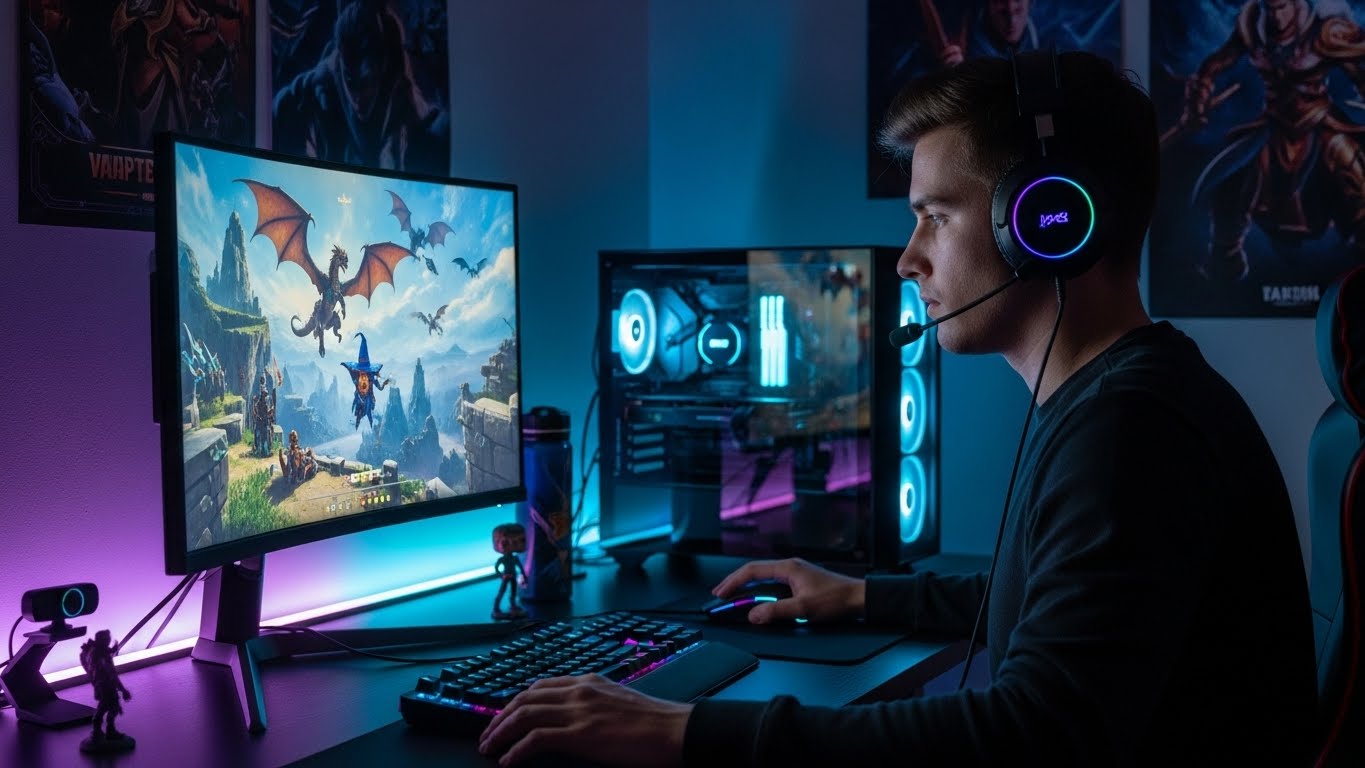

Introduction: Gaming Beyond Entertainment
Gaming is no longer just a pastime; it has evolved into a cultural phenomenon, a source of personal development, and a global industry. From simple pixelated games of the past to expansive open-world experiences today, gaming has captured the imagination of millions. It entertains, educates, and connects people, proving that it is far more than a hobby. This blog explores how gaming influences human behavior, social interaction, mental development, and even career paths.
The Evolution of Gaming
The journey of gaming has been remarkable. Early games were simple and focused on basic challenges and competition. As technology advanced, graphics, storytelling, and complexity grew. Today, games range from casual mobile experiences to highly sophisticated virtual reality simulations. The evolution of gaming reflects technological progress and societal changes, transforming it into an immersive form of art and entertainment.
Gaming and Cognitive Development
Research shows that gaming enhances various cognitive skills. Strategy games improve problem-solving and decision-making, puzzle games boost logic and spatial reasoning, and action games enhance reflexes and hand-eye coordination. Regular gaming encourages players to think critically and plan ahead. These cognitive benefits often extend beyond the gaming environment, helping players in education, work, and daily problem-solving.
Emotional Resilience Through Gaming
Gaming is a powerful tool for developing emotional resilience. Players frequently face challenges, failures, and setbacks within games. Learning to persist despite repeated losses fosters patience, determination, and a growth mindset. Games teach that failure is part of the journey, encouraging individuals to overcome obstacles rather than give up. This lesson is applicable not only in virtual worlds but in real-life situations as well.
Social Connections in Gaming Communities
Online gaming has created vibrant communities where people from all over the world can connect. Multiplayer games encourage teamwork, communication, and coordination. Gamers often form lasting friendships based on shared interests, experiences, and challenges. These communities provide social interaction, a sense of belonging, and even emotional support, making gaming a platform for meaningful human connection.
The Role of Esports
Esports has transformed gaming into a professional arena. Competitive gaming tournaments attract massive audiences, sponsorships, and career opportunities. Professional players train rigorously, similar to traditional athletes, emphasizing discipline, strategy, and teamwork. Esports demonstrates that gaming is not just entertainment but a serious, skill-based activity with recognition, rewards, and global impact.
Gaming and Creativity
Gaming is a fertile ground for creativity. Many games encourage players to build, design, and explore imaginative worlds. Sandbox games, in particular, allow users to create their own narratives, structures, and experiences. Story-driven games inspire artistic expression through fan art, storytelling, and content creation. Gaming empowers individuals to experiment and innovate, stimulating creativity in ways that extend beyond the screen.
Education Through Gaming
Educational games are transforming how people learn. Gamification makes learning interactive, engaging, and fun. Players develop knowledge in subjects like history, science, language, and mathematics while immersed in game mechanics. Even mainstream games often incorporate problem-solving, logic, and strategic thinking. Gaming is becoming an effective complement to traditional education, helping learners acquire skills in an engaging way.
Gaming and Mental Health
While excessive gaming can be a concern, moderate and mindful gaming can positively impact mental health. Games provide stress relief, relaxation, and a sense of accomplishment. They offer a safe space to explore emotions, test strategies, and experience narratives. Gaming can also foster social interaction and reduce feelings of isolation, particularly in online multiplayer environments.
Virtual Reality and Immersive Experiences
Virtual reality and augmented reality are redefining how games are experienced. VR allows players to step inside fully immersive worlds, interact with objects, and experience situations as if they were real. This technology enhances engagement, empathy, and sensory perception. It also has potential applications beyond entertainment, including education, therapy, and professional training.
Gaming as a Cultural Mirror
Games often reflect societal issues, values, and narratives. They explore themes such as morality, identity, conflict, and cooperation. Storytelling in games can influence perceptions, spark discussion, and promote empathy. Gaming has become a medium for cultural expression, shaping the way people understand themselves and the world around them.
The Economic Impact of Gaming
The gaming industry has grown into a multi-billion-dollar global enterprise. It supports developers, designers, marketers, streamers, and content creators. Gaming drives innovation in technology, including graphics, artificial intelligence, and networking. It also contributes to tourism, merchandise, and media content. The economic significance of gaming highlights its role as a powerful driver of modern industry.
Ethical Considerations in Gaming
As gaming grows, ethical concerns have emerged. Issues such as addiction, online harassment, and exposure to inappropriate content must be addressed. Game developers and communities play a role in creating safe and inclusive environments. Responsible gaming practices and awareness campaigns ensure that the benefits of gaming are maximized while minimizing negative impacts.
Skill Development Through Competitive Gaming
Competitive gaming hones a wide range of skills. Time management, strategic thinking, leadership, and teamwork are cultivated through rigorous practice and competition. Players learn to analyze opponents, adapt to new challenges, and perform under pressure. These skills are transferable to real-life scenarios, including business, academics, and personal development.
Gaming and Storytelling
Modern games are a new form of storytelling, blending narrative with interactivity. Players do not just observe stories; they participate, make choices, and influence outcomes. This interactivity creates a deeper emotional connection to the narrative. Gaming storytelling often rivals films and literature, offering rich, immersive experiences that engage the mind and emotions.
The Future of Gaming
The future of gaming is filled with possibilities. Advancements in artificial intelligence, cloud gaming, and immersive technologies promise more dynamic, interactive, and accessible experiences. Gaming will continue to evolve as a social platform, educational tool, and artistic medium. Its influence on society, culture, and personal development will expand in ways that are only beginning to be understood.
Balancing Gaming and Life
While gaming offers many benefits, balance is crucial. Time management, physical activity, and social interaction are essential to maintain a healthy lifestyle. Mindful gaming ensures that it remains a source of joy, learning, and connection without becoming a distraction or a source of stress.
Conclusion: Gaming as a Catalyst for Growth
Gaming is far more than entertainment. It develops cognitive skills, fosters creativity, builds social connections, and provides opportunities for personal growth. It reflects culture, inspires innovation, and opens doors to careers and communities. By embracing gaming responsibly and mindfully, individuals can harness its full potential. The world of gaming is not just a virtual space; it is a dynamic platform for learning, connection, and evolution.