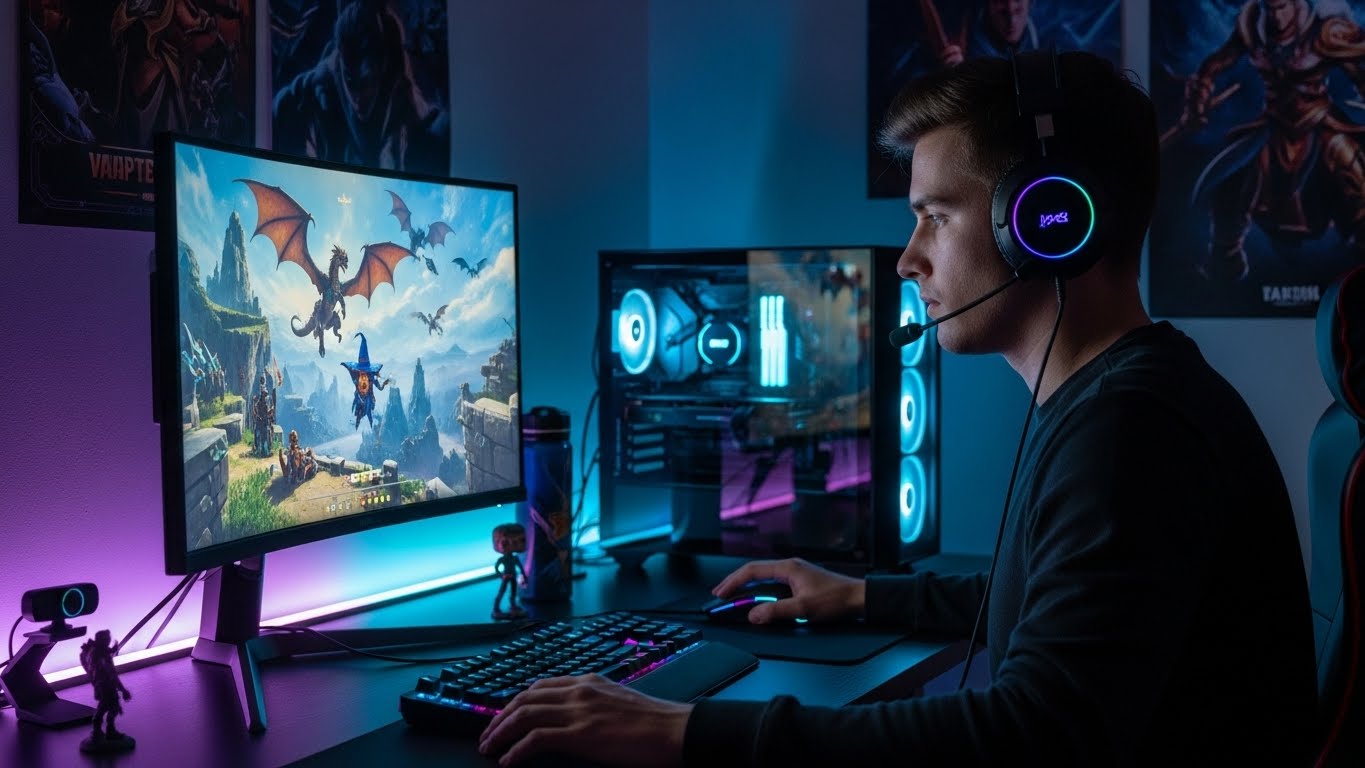

Gaming has evolved from a simple pastime into a global phenomenon that influences entertainment, technology, culture, and even education. Once considered a hobby for a niche audience, gaming now engages millions of people worldwide, spanning casual players, competitive professionals, and immersive virtual reality enthusiasts. This blog explores the evolution of gaming, its impact on society, the mental and social benefits, economic influence, technological advancements, and its promising future.
The Evolution of Gaming
The history of gaming dates back decades, from the early days of arcade machines and consoles to the sophisticated, immersive experiences of today. In the 1970s and 1980s, games like Pong, Pac-Man, and Space Invaders captivated audiences in arcades, introducing competitive and recreational play to a wider public. These games laid the foundation for interactive entertainment and social gaming spaces.
The 1990s brought home consoles into living rooms, allowing players to engage with games in personal spaces. Titles like Super Mario, Sonic the Hedgehog, and Street Fighter became cultural icons, defining the era of platformers and fighting games. Multiplayer gaming also began to flourish with early online platforms, paving the way for competitive and cooperative play across regions.
The 2000s and 2010s saw the rise of online gaming, massively multiplayer online games (MMOs), and realistic graphics, expanding gaming into immersive worlds. Today, virtual reality, augmented reality, cloud gaming, and mobile platforms have made gaming accessible and interactive like never before. The evolution of gaming reflects a continuous blend of creativity, technology, and cultural relevance.
The Social Impact of Gaming
Gaming is more than a solitary activity; it fosters communities, friendships, and global interaction. Multiplayer and online games encourage teamwork, strategy, and communication. Players collaborate to achieve goals, compete against others, and participate in global communities, forming bonds that transcend geographic boundaries.
Esports has further amplified gaming’s social influence. Professional competitions attract millions of spectators worldwide, offering fans opportunities to follow favorite players and teams. Gaming conventions and online communities provide spaces for enthusiasts to connect, share experiences, and celebrate shared passions. Gaming culture has become a global phenomenon, shaping social interaction and community engagement in the digital age.
Cognitive and Mental Benefits of Gaming
Contrary to the stereotype that gaming is purely recreational, research highlights multiple cognitive and mental benefits. Video games enhance problem-solving skills, memory, strategic thinking, and decision-making. Many games require players to plan, adapt, and react quickly, improving multitasking abilities and mental agility.
Gaming also has mental health benefits. Playing games can serve as a stress-reliever, offering immersive experiences that distract from daily challenges. Cooperative and social games provide emotional support through community engagement. Certain games also promote creativity, allowing players to build, design, and explore virtual worlds. While moderation is important, gaming offers significant cognitive and emotional benefits when approached responsibly.
Gaming and Education
Education has increasingly embraced gaming as a tool for learning. Educational games teach subjects such as mathematics, science, language, and history through interactive experiences. Gamification in education uses game mechanics to motivate students, improve engagement, and encourage problem-solving.
Games also foster soft skills such as teamwork, communication, and leadership. In competitive or cooperative settings, players learn to coordinate strategies, manage resources, and adapt to dynamic challenges. Virtual simulations allow students to experiment in risk-free environments, making learning practical and engaging. Gaming, therefore, is a bridge between entertainment and education, enhancing knowledge while developing essential life skills.
The Economic Influence of Gaming
The gaming industry is a major economic powerhouse, generating billions in revenue annually through game sales, in-game purchases, subscriptions, and merchandise. Professional esports leagues, tournaments, and live events also contribute significantly to the global economy.
Gaming drives innovation in technology, software development, and entertainment. Developers, designers, marketers, and event organizers all benefit from the growth of the industry. Independent game developers and startups contribute to diverse content, while major studios invest heavily in research, graphics, and immersive gameplay. Gaming’s economic influence extends beyond revenue, driving employment, innovation, and entrepreneurship worldwide.
Technological Advancements in Gaming
Technology has been central to gaming’s evolution. High-performance hardware, advanced graphics engines, and virtual reality systems have transformed how games are created and experienced. Realistic graphics, immersive sound design, and physics engines allow players to feel fully engaged in virtual worlds.
Artificial intelligence plays a crucial role in enhancing gameplay, enabling smarter in-game characters, adaptive difficulty levels, and personalized experiences. Cloud gaming has further revolutionized access, allowing players to stream games on various devices without high-end hardware. Augmented reality and virtual reality push the boundaries of immersion, creating interactive and lifelike environments that redefine the gaming experience.
The Rise of Competitive Gaming and Esports
Competitive gaming, or esports, has grown into a global phenomenon. Players compete professionally in games ranging from first-person shooters to multiplayer online battle arenas. Esports tournaments attract millions of viewers, substantial sponsorships, and international recognition.
Esports has elevated gaming to a professional level, with structured leagues, coaching, and dedicated training facilities. Top players are celebrated for their skill, strategy, and teamwork, similar to athletes in traditional sports. Competitive gaming also inspires community participation, fan engagement, and career opportunities in game design, broadcasting, event management, and marketing.
Gaming and Culture
Gaming has become a cultural force, influencing art, music, fashion, and storytelling. Iconic characters, narratives, and worlds shape popular culture and inspire creative expression. Cosplay, fan art, and game-inspired merchandise highlight the deep connection between players and gaming worlds.
Gaming also fosters inclusivity and diversity. Players from various backgrounds can engage in shared experiences, promoting cross-cultural interaction and collaboration. Storytelling in games addresses complex social issues, ethical dilemmas, and human experiences, making gaming a medium for both entertainment and cultural reflection.
Challenges in Gaming
Despite its many benefits, gaming faces challenges. Excessive gaming can lead to addiction, social isolation, and mental health concerns. Balancing screen time, promoting moderation, and fostering responsible gaming habits are essential for maintaining well-being.
The industry also faces issues such as harassment, toxicity, and lack of diversity. Ensuring safe and inclusive environments for players of all genders, ages, and backgrounds is crucial. Developers, communities, and educators play a role in creating positive gaming experiences while mitigating potential risks.
The Future of Gaming
The future of gaming is full of exciting possibilities. Advances in artificial intelligence, virtual reality, and augmented reality will create increasingly immersive and interactive experiences. Cloud gaming and mobile platforms will make gaming more accessible, connecting players worldwide.
Social integration and gamification may expand beyond entertainment into education, healthcare, and professional training. Games could serve as tools for cognitive development, rehabilitation, and skill-building. As technology continues to evolve, gaming will remain a dynamic and influential force, shaping culture, innovation, and human experience.
Conclusion: Gaming as a Transformative Medium
Gaming has transformed from a simple form of entertainment into a powerful cultural, educational, and economic force. It enhances cognitive skills, fosters social connections, drives technological innovation, and creates career opportunities. While challenges such as addiction and toxicity exist, responsible gaming and inclusive communities ensure that the benefits outweigh the risks.
The world of gaming continues to expand, embracing new technologies, narratives, and experiences. From casual players to professional esports athletes, gaming connects people, inspires creativity, and shapes modern culture. It is more than a pastime—it is a transformative medium that reflects human imagination, skill, and the potential of technology to entertain, educate, and unite.