
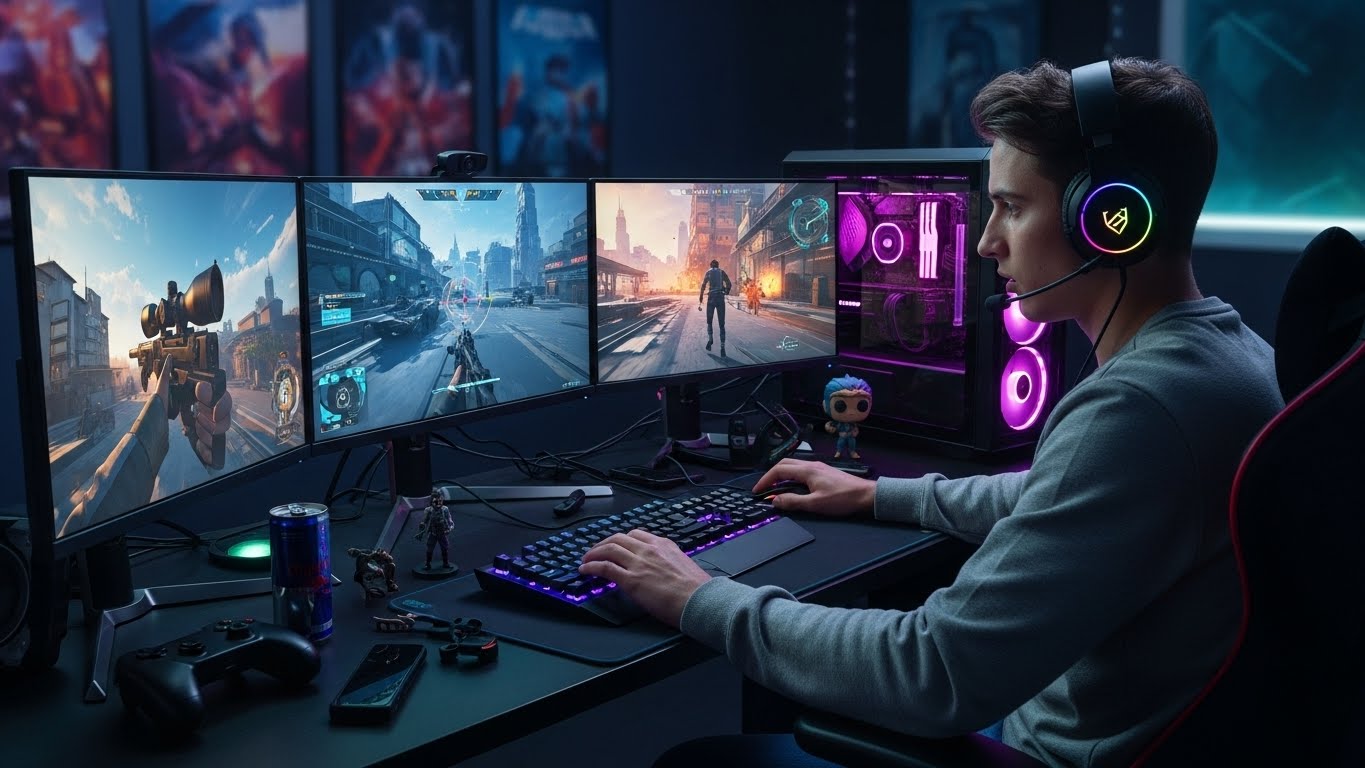
In the world of entertainment, few mediums have evolved as rapidly and as significantly as video games. What began as simple pixelated screens in arcades has now blossomed into an intricate, immersive ecosystem, comprising sprawling open-world games, competitive e-sports, and deep narrative-driven experiences. Gaming has not only become a hobby for millions worldwide, but a cultural cornerstone with a massive impact on technology, social dynamics, and entertainment as a whole.
In this blog post, we will explore the multifaceted nature of gaming, from its origins to the future of virtual reality and the cultural shifts that have shaped the way we perceive video games today.
The Origins of Video Games: From Pixels to Immersive Worlds
The journey of gaming began in the mid-20th century, when early computer scientists and engineers sought to create interactive experiences on screens. The first true video game, “Tennis for Two”, was developed in 1958 by physicist William Higinbotham. However, it was “Pong”, released in 1972 by Atari, that marked the birth of the video game industry as we know it.
Early video games were simplistic in design, often consisting of basic shapes and rudimentary gameplay mechanics. Yet, their impact was undeniable, sparking an entire industry that would grow exponentially over the next several decades. The 1980s witnessed the introduction of arcade games, which became a cultural phenomenon, attracting players to arcades in search of the highest score. Games like “Space Invaders”, “Pac-Man”, and “Donkey Kong” became household names and began laying the foundation for gaming as a major cultural force.
In the 1990s, the introduction of home consoles such as the Super Nintendo Entertainment System (SNES) and Sony PlayStation revolutionized gaming. This era saw the birth of 3D graphics and more sophisticated gameplay mechanics. Titles like “Super Mario 64”, “The Legend of Zelda: Ocarina of Time”, and “Final Fantasy VII” raised the bar for what was possible in terms of storytelling and interactive experiences.
The Rise of Online Gaming: A Global Revolution
As technology advanced, so did the ways in which people could interact with video games. The 2000s saw the rise of the internet, which brought about a new era in gaming: online multiplayer games. With the advent of broadband internet, gamers were no longer confined to playing with friends in the same room. Titles such as “Halo 2” and “World of Warcraft” allowed players from all over the world to connect and collaborate or compete in virtual spaces.
The concept of online gaming gave rise to a new type of gaming community. Players could now form guilds, clans, and teams to tackle in-game challenges together. Competitive gaming, known as e-sports, began to take root, with large-scale tournaments offering significant cash prizes and professional teams emerging. E-sports is now a multi-billion-dollar industry, with games like “League of Legends”, “Dota 2”, and “Fortnite” attracting millions of viewers globally.
The social aspect of gaming has also become a defining feature. Players no longer simply engage with the game world; they also engage with each other. The rise of streaming platforms like Twitch and YouTube Gaming has allowed gamers to share their experiences in real-time, building communities and fanbases. For many, watching others play has become as entertaining as playing the games themselves.
The Impact of Mobile Gaming: Gaming on the Go
One of the most significant shifts in the gaming landscape in the past decade has been the rise of mobile gaming. The ubiquity of smartphones and tablets has made gaming accessible to an entirely new demographic. Games like “Candy Crush Saga”, “Clash of Clans”, and “Pokémon GO” have become cultural phenomena, drawing millions of players who may never have considered traditional gaming consoles.
Mobile gaming has democratized access to gaming, allowing players to enjoy their favorite titles anywhere and anytime. The introduction of app stores has made it easier for indie developers to publish games and reach a global audience. While mobile games tend to be more casual and often rely on microtransactions for monetization, they have still managed to capture the imagination of gamers worldwide.
The simplicity of mobile gaming has made it a great entry point for new players, many of whom might not have otherwise been exposed to more complex gaming platforms. As mobile technology continues to improve, it’s likely that mobile games will become even more sophisticated, offering deeper experiences and higher-quality graphics.
The Role of Storytelling in Modern Games
One of the key developments in the evolution of video games has been the increasing focus on narrative. In the early days of gaming, stories were often simple, with games focusing primarily on gameplay mechanics. However, as technology advanced, developers began to experiment with more intricate and emotional narratives, similar to those found in films and literature.
Today, many of the most beloved video games are praised for their storytelling. Titles like “The Last of Us”, “Red Dead Redemption 2”, and “The Witcher 3: Wild Hunt” have captivated players with rich, immersive worlds and complex characters. These games often tackle deep, emotional themes, such as loss, morality, and redemption, elevating video games to the status of serious artistic expression.
One notable example is “The Last of Us”, a post-apocalyptic action-adventure game that tells the story of Joel and Ellie, two survivors navigating a world ravaged by disease. The emotional depth of the characters and the moral dilemmas they face have made “The Last of Us” a critical and commercial success, with its storytelling praised for being as compelling as any blockbuster film or novel.
Virtual Reality: The Next Frontier in Gaming
Looking to the future, one of the most exciting developments in gaming technology is the advent of virtual reality (VR). While VR has been a part of gaming for several years, it has not yet reached the level of mass adoption seen in other areas of gaming. However, as VR headsets like the Oculus Rift, PlayStation VR, and HTC Vive continue to improve in terms of affordability and performance, the potential for VR gaming is enormous.
VR gaming offers a completely immersive experience, allowing players to feel as though they are physically inside the game world. From exploring alien landscapes to engaging in sword fights, VR provides a level of interactivity that traditional gaming can’t match. The future of VR could revolutionize how we experience not just games, but entertainment in general.
One of the challenges of VR gaming is the need for high-end hardware and a dedicated space, which can be limiting for many players. However, as technology improves, it’s likely that VR will become more accessible and integrated into everyday gaming experiences. The promise of fully immersive virtual worlds is something many gamers are eagerly anticipating.
The Social and Cultural Impact of Gaming
Beyond the gameplay, the rise of gaming has had a profound impact on society. Video games have not only shaped the way we interact with technology but also how we connect with one another. The idea of gaming as a solo activity has been replaced by a more social, community-driven approach. Gamers today interact with each other in virtual spaces, building friendships, rivalries, and communities.
The growth of gaming influencers and streamers has also contributed to the mainstream acceptance of gaming as a legitimate form of entertainment. Platforms like Twitch and YouTube Gaming allow gamers to share their passion with a global audience, creating opportunities for new types of fame and fortune.
Moreover, gaming has become an increasingly important cultural touchstone, influencing everything from fashion to music to film. Major gaming franchises like “Fortnite” and “Minecraft” have become cultural icons, spawning merchandise, films, and even collaborations with artists and celebrities.
Conclusion: The Future of Gaming
Gaming has come a long way from its humble beginnings, and it shows no signs of slowing down. With advances in technology, storytelling, and social interaction, the future of gaming looks incredibly exciting. Virtual reality, cloud gaming, and AI-driven experiences are all on the horizon, promising to push the boundaries of what we can expect from interactive entertainment.
As gaming continues to evolve, one thing is certain: its impact on our culture, our technology, and our social lives will only grow stronger. Whether you’re a casual player or a hardcore enthusiast, the world of gaming offers something for everyone. The thrill of exploring new worlds, mastering complex challenges, and connecting with others will continue to define the gaming experience for years to come.
The question now isn’t whether gaming will continue to grow—it’s how much further can it go? And with the current pace of innovation, the answer is, undoubtedly, a lot farther.